

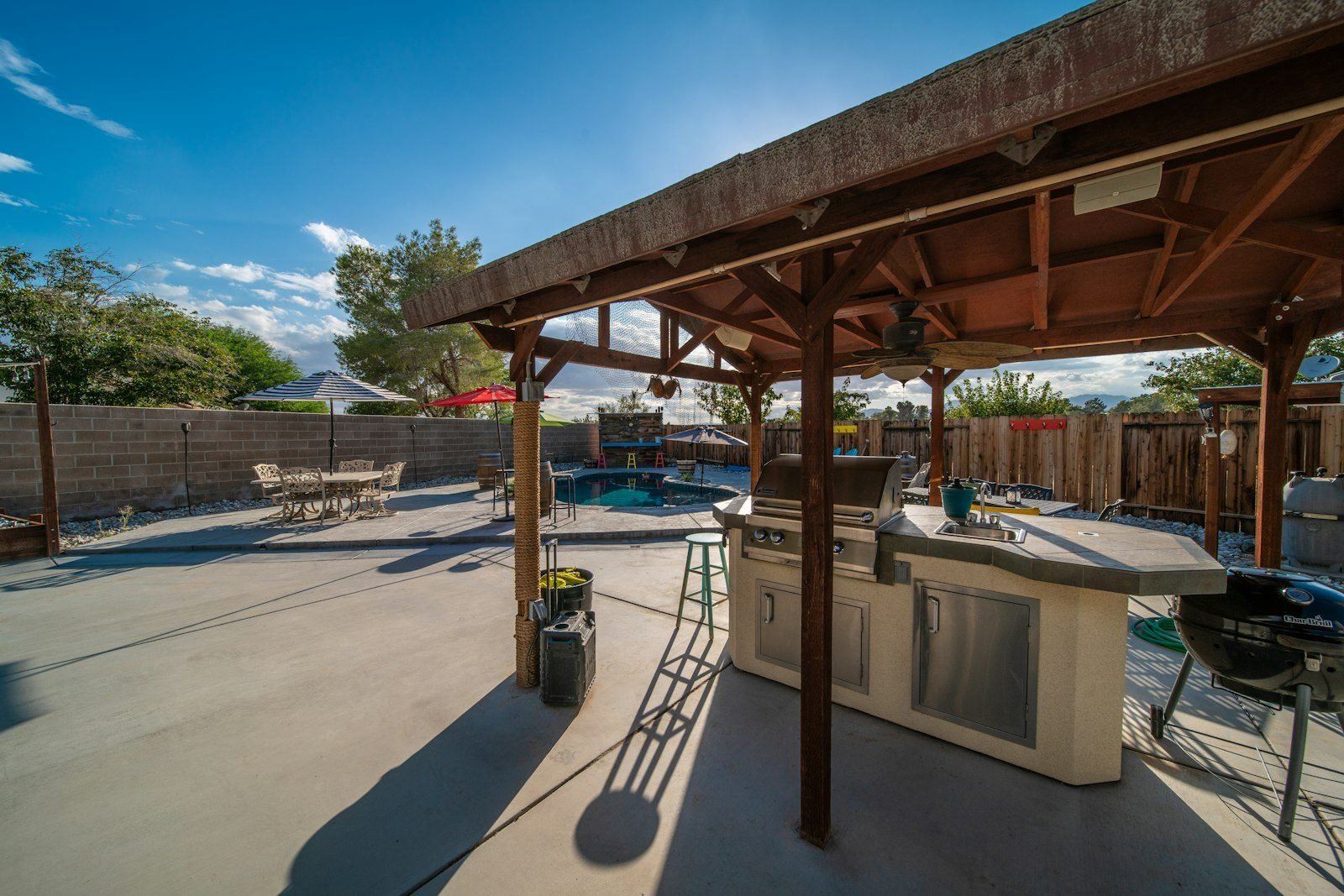
Good backyard outdoor kitchen ideas turn the space behind your home into a place where people actually gather: Sunday lunch, a birthday party, dinner with friends or just a slow coffee among the plants. Unlike a covered porch attached to the house, a kitchen out in the yard has to work with the land itself, with the sun, the rain and the garden around it.
In this guide, you’ll learn how to pick the right spot, which kind of cover and flooring make sense, how to weave in planting beds and lighting, and which safety points you can’t skip. At the end, there’s a planning checklist.
Where to place your backyard outdoor kitchen
Location shapes your comfort, the cost of the cover and even whether the space gets used at all. Before you sketch a single counter, watch your yard at different times of day.
- Afternoon sun: in warm climates, late-afternoon sun is usually the harshest. If your get-togethers tend to happen then, look for a spot shaded by the house, a wall or trees.
- Wind and smoke: notice which way the wind usually blows. Place the grill or wood-fired oven so smoke doesn’t drift into the house, over the table or toward your neighbors’ windows.
- Distance from the indoor kitchen: the closer it is, the fewer trips with heavy platters. In a long yard, plan for a small sink and a prep counter right in the outdoor space.
- Trees and roots: natural shade is lovely, but avoid pouring foundations right next to large trees. Falling leaves and fruit on the roof, plus roots lifting the paving, mean constant upkeep.
In small yards, setting the kitchen against a side wall usually frees up the center for lawn or planting beds.

Cover options: pergola, roof or something lighter
The cover decides which seasons you’ll use the space. The best choice is the one that suits your climate, your budget and how much natural light you want.
- Solid roof: protects from sun and rain and lets you install light fixtures and a ceiling fan. It needs a sturdier structure and usually a bigger budget.
- Pergola with a top panel: treated wood, steel or aluminum, topped with laminated glass, polycarbonate or translucent roofing. It keeps things bright and airy, but can get hot on sunny days without good ventilation.
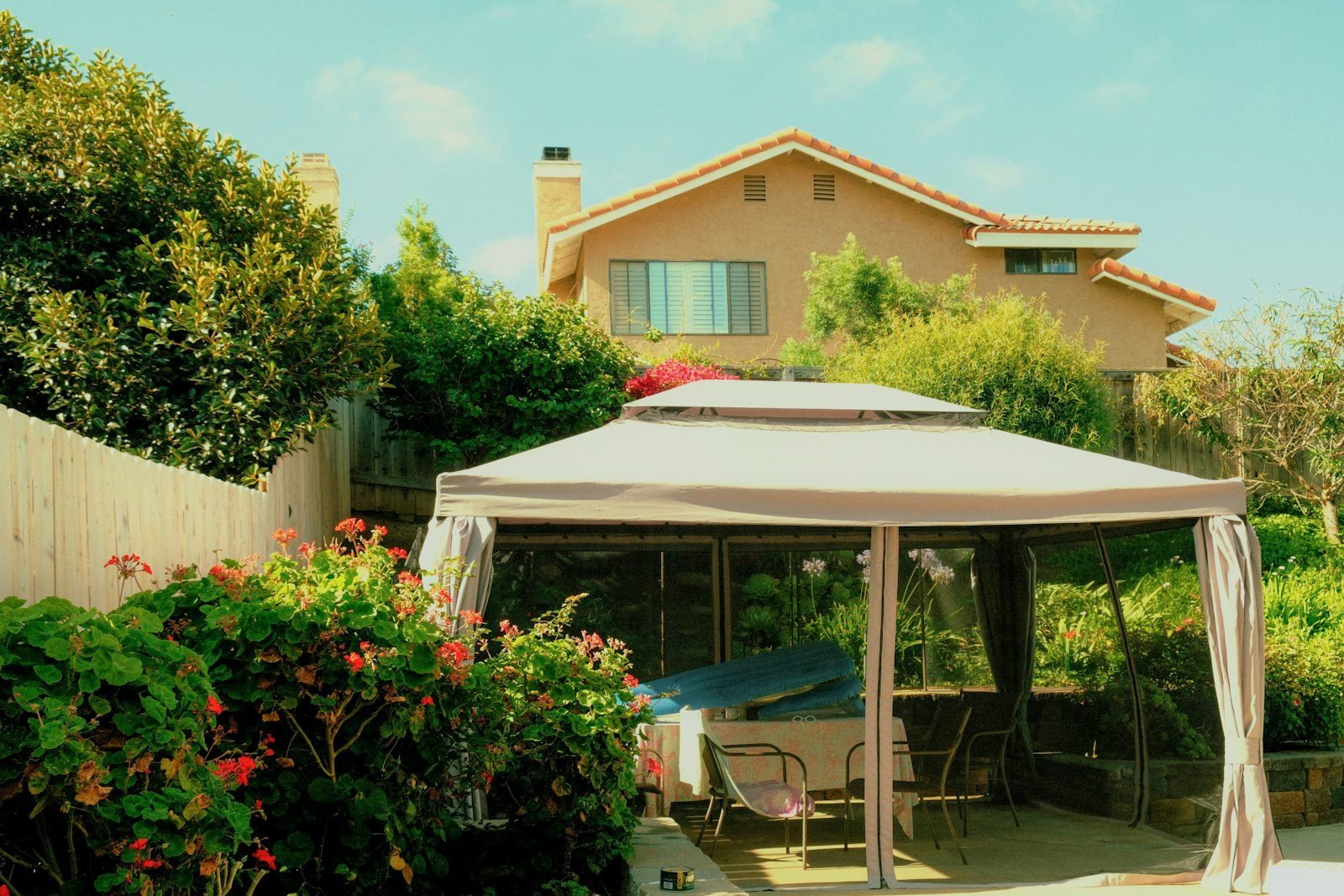
- Open pergola with climbing plants: creates dappled shade and looks beautiful, but won’t keep you dry. It works well as an extension of a small covered zone where the counter and grill sit.
- Umbrellas and retractable awnings: flexible solutions if you rent or are still testing the best spot in the yard.
Any permanent structure should be designed by a licensed professional (an engineer or architect), mainly because of weight, wind loads and rainwater runoff. If you live in a community with an HOA, check its rules before you build.
Flooring and drainage: the detail you don’t see but always feel
Out in the yard, rainwater needs somewhere to go. A surface without the right slope will collect puddles, stain and become a slipping hazard. Ask whoever is in charge of the build to plan a gentle fall plus drains or channel drains where the kitchen meets the garden.
For the surface itself, choose slip-resistant materials rated for outdoor use: outdoor-grade porcelain tile, natural stone with a textured finish, textured concrete, or decking in treated wood or composite. Smooth, glossy floors get dangerous when wet, especially near the sink and the grill.
To blend the area into the garden, transition with gravel, stepping stones set in the lawn or strips of ground cover instead of ending the paving with a hard edge.
Counters, grill and utilities
The working core of an outdoor kitchen usually includes a counter, a sink, a grill or cooktop, a fridge or mini fridge and some storage. Arrange them in a logical sequence: store, wash, prep, cook and serve.
If you’re planning a grill, our complete guide to an outdoor kitchen with a grill covers models, ventilation and safety in detail. The key reminder here: gas, electrical and plumbing work must be done by licensed professionals. Outdoor outlets need weather protection, and gas lines require ventilation and suitable materials under local codes.
For countertops, granite, quartzite and sealed concrete generally handle sun and heat well.
Landscaping around it: the garden as part of the room
What sets a backyard kitchen apart from a simple outdoor cooking station is the greenery around it. Think of the planting in layers: ground cover and lawn at your feet, mid-height shrubs for privacy, and trees or climbers for shade. For more on planning those layers, read our guide to home landscape design.
- Herb bed: a raised bed near the counter keeps herbs within reach. Rosemary (Rosmarinus officinalis) loves sun and, according to the ASPCA, is non-toxic to dogs and cats.
- Be careful with lemongrass: lemongrass (Cymbopogon citratus) is fragrant and popular, but the ASPCA lists it as toxic to dogs, cats and horses. If pets roam the yard, plant it out of reach or choose another species.
- Keep plants away from fire: dry plants, straw and foliage should stay well clear of the grill and any open flame.
Before choosing any plant, make sure it’s safe for the children and pets in your home and that it suits the amount of sun at your chosen spot.
Outdoor lighting: practical and cozy
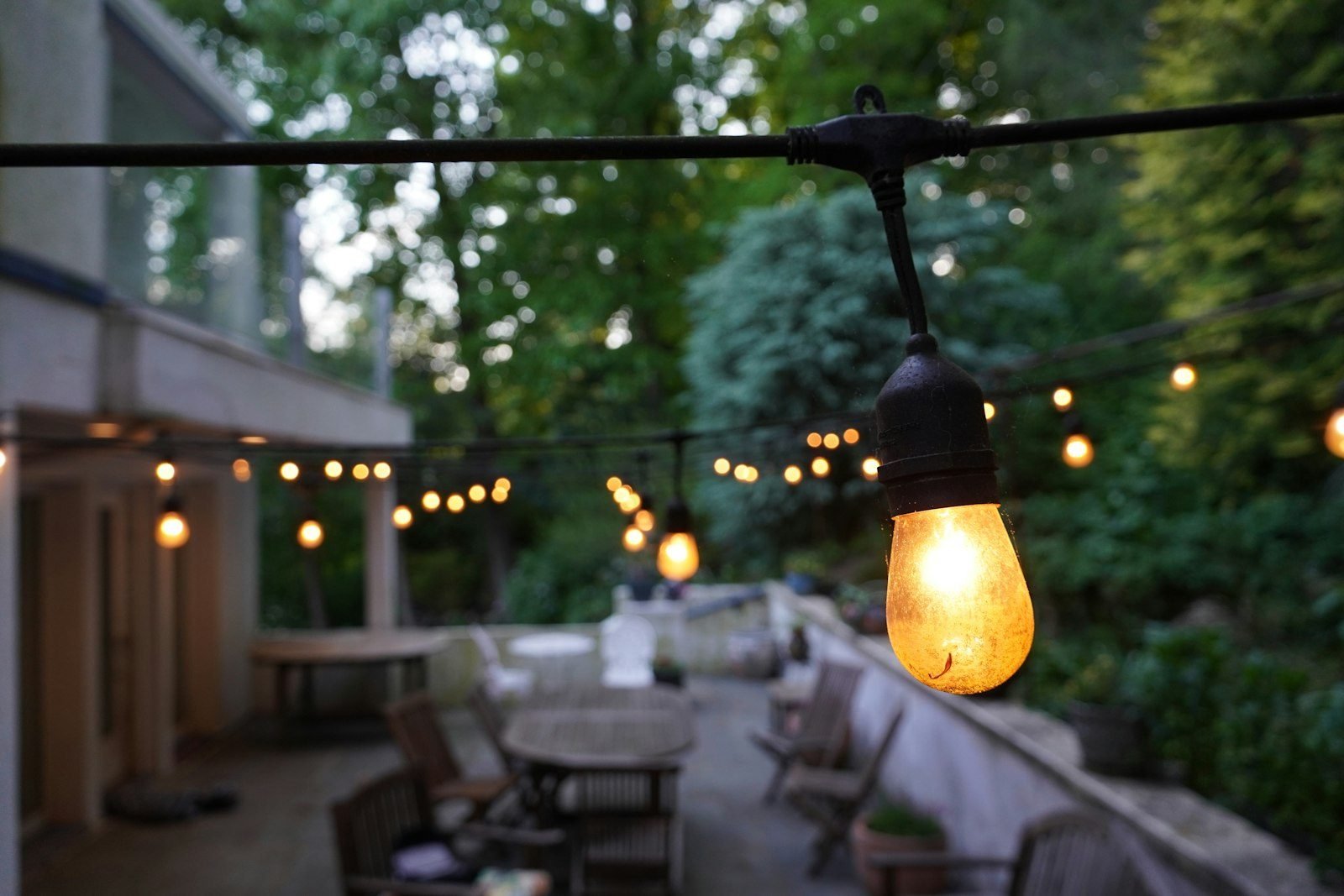
A well-lit outdoor kitchen needs at least three kinds of light. Task lighting shines directly on the counter and grill so you can cook safely. Ambient lighting is softer and sits over the table: outdoor-rated pendants or string lights. Accent lighting in the garden uses spike lights or path lights aimed at trees and walkways.
Choose fixtures with an ingress protection rating suited to outdoor use and warm color temperatures, which make the space feel welcoming at night. Our guide to home lighting design explains color temperature and how to lay out fixtures. As with any outdoor electrical work, installation should be handled by a licensed electrician.
Furniture and materials that can take the weather
Outdoor furniture faces sun, rain and dust. Go for wood species made for outdoor use (with regular upkeep), powder-coated aluminum or steel, synthetic wicker and fabrics treated for outdoor use. Benches built against a wall and a few stackable chairs handle a full house without taking up space all year. One observation from someone who follows the housing market day to day: well-planned, easy-care outdoor areas tend to be the ones residents use most, more than the biggest or most expensive ones.
Planning checklist for a backyard outdoor kitchen
Use this table before you request quotes.
| Step | What to check | Who to involve |
|---|---|---|
| Location | Afternoon sun, wind, smoke, distance from the kitchen and the neighbors | Household |
| Rules | HOA rules and local permit requirements | Household and the professional in charge |
| Cover | Type, structure, rainwater runoff | Engineer or architect |
| Flooring and drainage | Slip-resistant material, slope, drains and channels | Contractor |
| Utilities | Water, drainage, gas and weather-protected electrical points | Licensed plumber, electrician and gas fitter |
| Landscaping | Pet- and child-safe plants, distance from fire, privacy | Landscaper or household |
| Lighting | Task, ambient and garden accent lighting | Licensed electrician |
| Furniture | Outdoor-rated materials and room to move around | Household |
Frequently asked questions
How much space do I need for a backyard outdoor kitchen?
There’s no single number. Leave room for a counter, a table with chairs and comfortable circulation. In a small yard, a counter against the wall and a folding table can already do the job.
Do I need a permit to build in my backyard?
It depends on where you live, the size of the project and any HOA rules. Check with your local building department and community rules, and work with a qualified professional.
How much does a backyard outdoor kitchen cost?
It varies by region, size, cover, utilities and finishes. An area with an umbrella and freestanding furniture costs far less than a structure with a roof and a built-in grill.
Which plants work well near an outdoor kitchen?
Species that suit the light at the spot and are safe for pets and children. Herbs like rosemary pair well with cooking; keep everything away from the fire.
Conclusion
A backyard outdoor kitchen works best when it grows out of observing the site: where the sun hits, where the wind blows, how water drains and what the garden already offers. With the right cover, safe flooring, well-chosen plants and good lighting, it can become everyone’s favorite spot. Tell us in the comments what your yard is like and which ideas you want to try first.
Featured image: Photo: Brian Wangenheim / Unsplash
Leave a Reply