

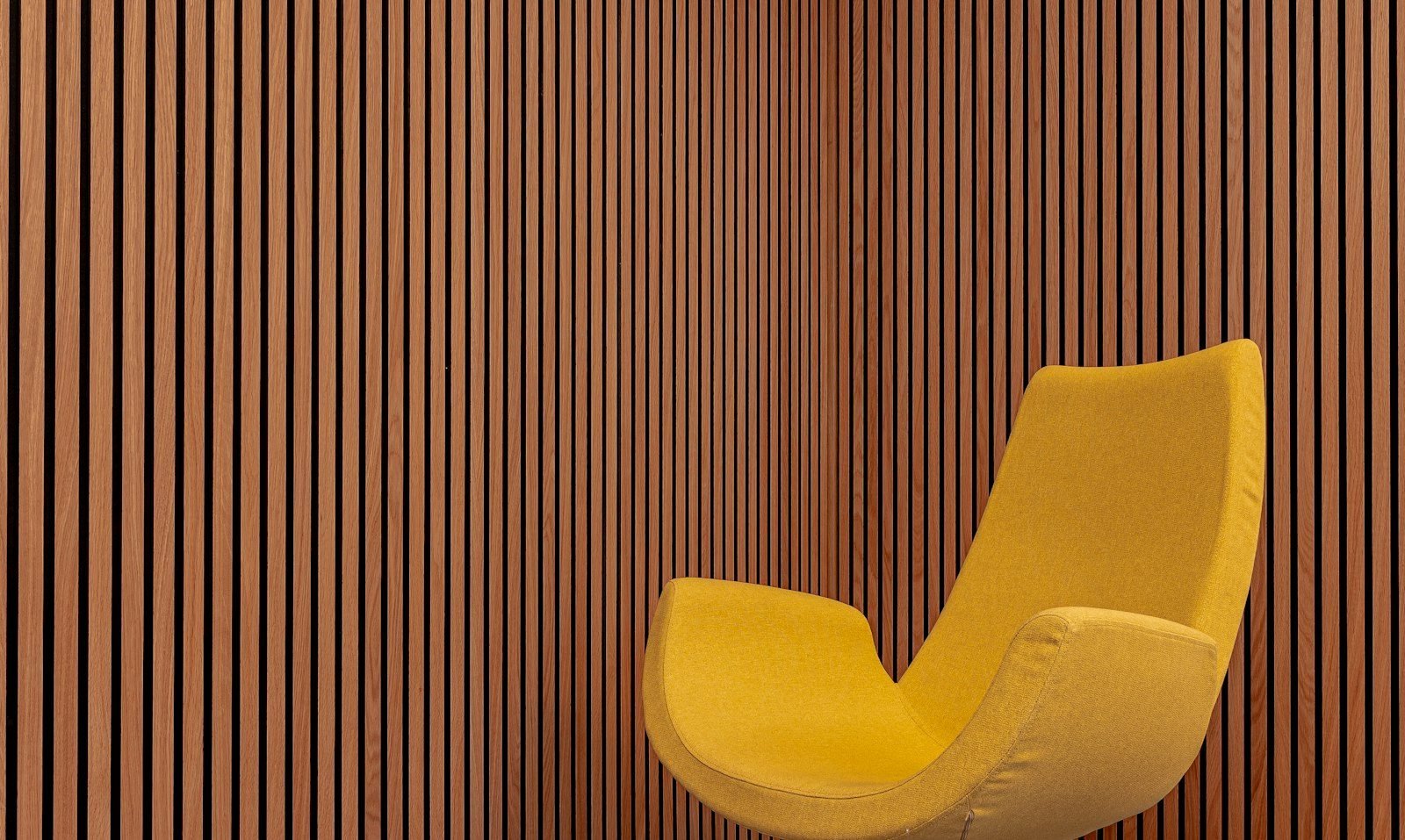
Slatted walls have taken over living rooms, bedrooms and entryways because they add warmth, create visual rhythm and bring in wood texture without crowding the space. The catch is that a real slat panel calls for carpentry, fixings and a budget that is not always available. That is where wood slat wallpaper comes in: a simpler way to get a very similar look.
In this guide, you will learn what this kind of wallpaper is, which versions exist, which rooms suit it best, how to pair colors and furniture, and which care steps keep the finish looking good for longer.
What is wood slat wallpaper?
It is a wall covering that imitates wooden slats placed side by side, usually vertically, with dark lines between them that mimic the shadow of the gaps. Some versions are completely flat and reproduce the design only in the print; others have a light raised texture that makes the effect more convincing when light hits the wall from the side.
The look recalls slat panels made of MDF or solid wood, but installation is very different: instead of screwed-on structures, you work with rolls or thin tiles applied directly to the wall. That means less weight, less mess and a faster install.
Types of wood slat wallpaper
Vinyl
It has a vinyl layer that usually handles moisture better and can often be wiped with a slightly damp cloth, as long as the manufacturer allows it. A good pick for busy living rooms, hallways and kids’ rooms.
Peel-and-stick
It comes with adhesive on the back, so there is no paste to mix. It is practical for renters or anyone who likes to change the decor often. On the other hand, it needs a very smooth, clean wall, because any imperfection shows through.
Non-woven or traditional paper
Hung with paste, it gives a more matte, natural finish. Non-woven versions are usually easier to strip than standard paper. Best for dry rooms such as bedrooms and home offices.
3D textured panels
Some product lines sell the slat look as lightweight tiles with real depth. The result gets closer to a wooden panel, but the joints between tiles need care so the seams do not show.
Where to use wood slat wallpaper
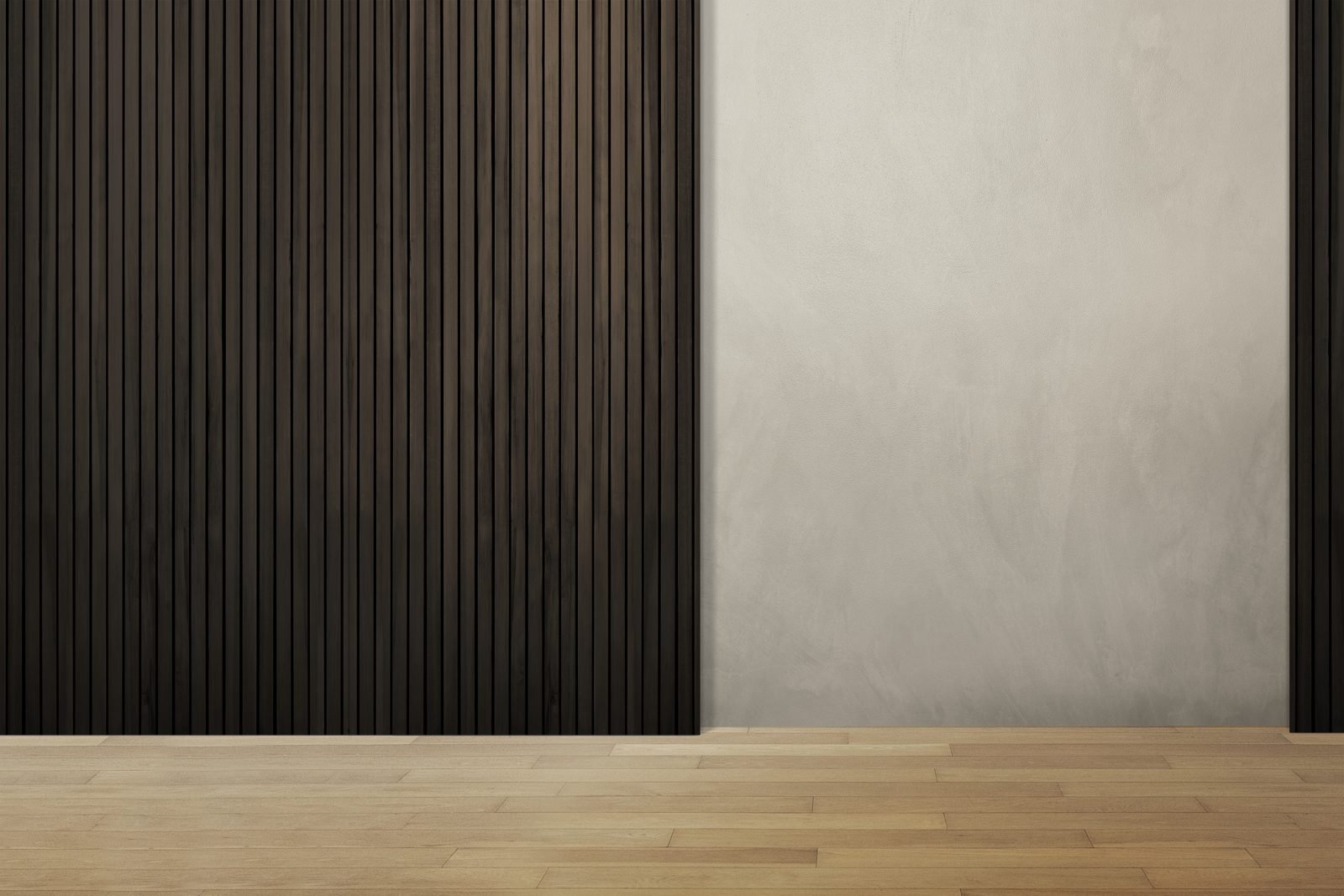
Slats work best on an accent wall. When they cover every wall in a room, the effect tends to feel heavy and tiring. These are the most common uses.
- TV wall: vertical slats frame the screen and help soften the dark rectangle of a TV that is switched off. If your living room calls for a different pattern, see our guide to living room wallpaper ideas.
- Behind the bed: applied from the floor to a little above the bed, or all the way to the ceiling, it can replace an upholstered headboard and make the bedroom feel cozier. For more patterns, check our bedroom wallpaper ideas.
- Entryway and hallway: the vertical lines make ceilings look taller and give personality to an area that is often forgotten.
- Home office: it makes a tidy, elegant video-call background without shelves full of objects.
- Dining room: behind a sideboard or buffet, it creates a subtle focal point.
Avoid standard paper versions in bathrooms with a shower, kitchen areas right next to the stove and walls with any sign of leaks. In those spots, moisture can lift the material or encourage stains and mold. If there is a leak, fix it before applying any wall covering.
Colors and combinations that work
The slat color sets the mood of the room. Think of it as part of the palette, not a standalone element.
- Light wood (oak, ash, pine): feels airy and suits Scandinavian, Japandi and minimalist decor. Great in small rooms or spaces with little natural light.
- Mid-tone wood (walnut, honey, caramel): the most versatile option. It pairs well with sand, olive green, terracotta and off-white.
- Dark wood (tobacco, espresso, ebony): creates a sophisticated, intimate atmosphere. It needs good lighting and lighter furniture nearby for balance.
- Colored or black slats: matte black, green or deep blue versions modernize the wall and look great in contemporary rooms.
If your floor is already wood, pick a slat tone that is clearly different, much lighter or much darker, to avoid an “almost matching” combination.
Lighting: the detail that makes slats look real
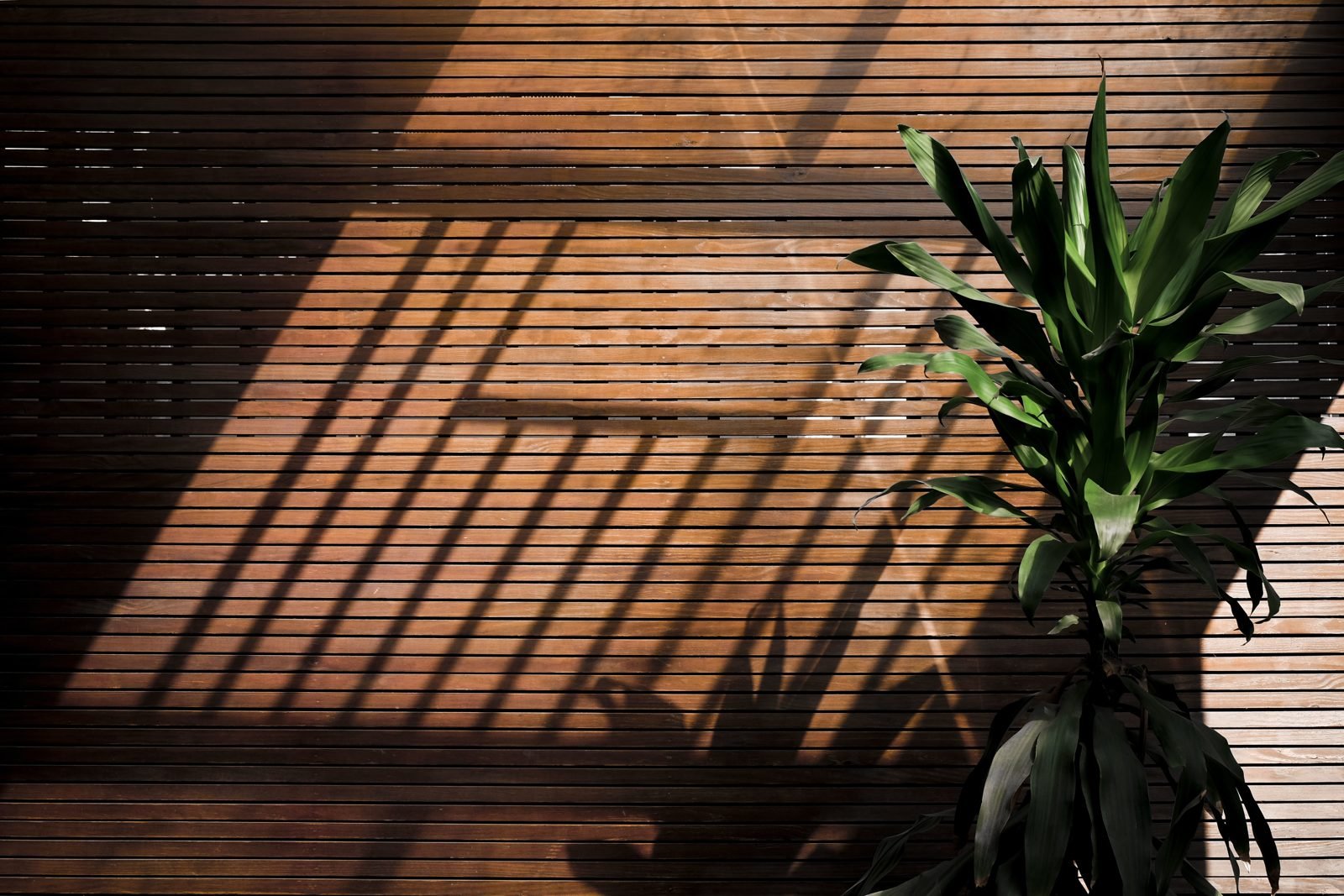
Flat slat wallpaper depends on light to gain depth. Flat light coming only from the ceiling and straight on makes the pattern look more “printed.” Grazing light, on the other hand, highlights the grooves and brings the result closer to a real wood panel.
- LED strips or channels recessed into the ceiling, right next to the wall, create a wash of light from top to bottom.
- Wall sconces mounted over the slats, beside the bed or the TV, reinforce the texture.
- Choose warmer color temperatures (around 2700 K to 3000 K) for living rooms and bedrooms, which tend to bring out wood tones.
Any new light fixture, whether recessed or with exposed wiring, should be installed by a licensed electrician.
Slat wallpaper or a wood panel: comparison
The table sums up the main differences.
| Criteria | Wood slat wallpaper | MDF or solid wood slat panel |
|---|---|---|
| Cost | Usually lower (varies by brand, region and wall size) | Usually higher, includes carpentry and installation |
| Installation | Quick, can be a careful DIY job | Needs a professional, fixings and cuts |
| Depth and texture | Flat or lightly raised | Real depth, real shadows |
| Space taken | Practically none | A few centimeters (about an inch or more) |
| Removal | Simpler, especially peel-and-stick and non-woven | Leaves holes and requires wall repair |
| Rented home | A good option, especially removable versions | Depends on the landlord’s permission |
| Acoustics | No change | May help reduce echo, depending on the model |
From a real estate perspective, removable solutions make it easier to hand back a rental and reduce disputes at the move-out inspection. Even so, check your lease and talk to your landlord or property manager before changing the walls.
How to apply it and care for it
Installation follows the same logic as other wallpapers, with one extra point: the lines must be perfectly aligned, because any drift shows up immediately in a slat pattern. You will find the full step-by-step in our guide on how to hang wallpaper. Before you start, use this checklist:
- A dry, smooth wall with no mold, peeling paint or leaks.
- A plumb line marked with a level for the first strip.
- Rolls from the same batch, to avoid color variation.
- 10% to 15% extra for cuts and pattern matching.
- A sharp utility knife and a smoothing tool to press out bubbles.
- Power switched off at the breaker before cutting around outlets and switches.
For cleaning, always follow the manufacturer’s instructions. In general, vinyl versions can take a slightly damp cloth with mild soap, while regular paper only needs a duster or a dry cloth. Avoid abrasive products, which can wear away the print.
Frequently asked questions
Does wood slat wallpaper look like real wood?
From a distance and with good lighting, quality versions come very close. Up close, the difference in depth shows. Models with a raised texture plus grazing light make the effect more realistic.
Can I use slat wallpaper in a rental?
Yes. Removable peel-and-stick or non-woven models are the best choice. Still, check your lease and test removal in a hidden corner before covering the whole wall.
Vertical or horizontal slats?
Vertical slats make the ceiling feel higher and are the most popular choice for living rooms and bedrooms. Horizontal slats stretch the wall visually and work well in hallways and long rooms.
Does slat wallpaper work in a bathroom?
Only in powder rooms or areas without direct steam, and with a vinyl product rated for humidity. In the shower area, stick to tile or other water-resistant materials.
Conclusion
Wood slat wallpaper is an affordable way to bring texture, warmth and a contemporary feel into your home, with less construction and more freedom to change later. Choose the material carefully, plan the color together with the floor and furniture, and pay attention to lighting. Tell us in the comments which room you would use it in, or keep reading our wallpaper ideas for other rooms.
Featured image: Photo: Jan Kopřiva / Unsplash
Leave a Reply