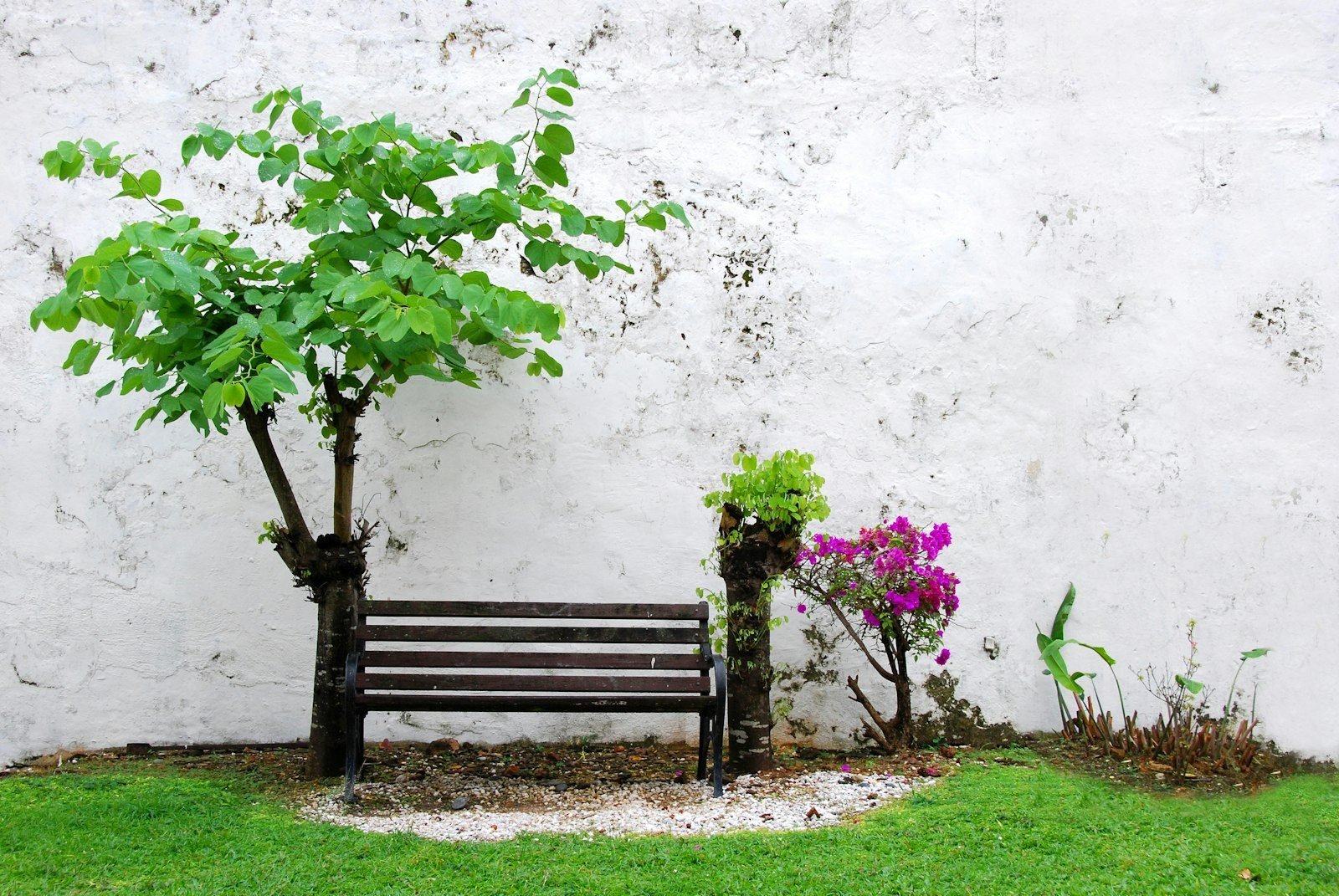
A small, simple garden is one of the quickest ways to make a home feel more welcoming, and the small garden ideas in this guide prove you do not need much room. A front setback, a side passage or a backyard of just a few square meters can hold plants, a path and even a bench for morning coffee outdoors.
The secret is doing less, but doing it better: a few well-chosen species, materials that do not need constant upkeep and a layout that is easy to read. Below: how to plan the space, which paving and plants to use and a checklist to finish it all in a weekend.
Start by assessing your space
Before buying a single plant, spend a few days observing the area. Four questions settle most decisions:
- How much sun does it get? Note whether direct sun arrives in the morning, in the afternoon or hardly ever. That defines which plants will work.
- Is there soil, or only paving? Exposed ground allows planting beds; a concrete yard calls for pots, planters or raised beds.
- How does water drain? Slow-drying puddles mean you need to fix drainage first.
- How much time will you have for care? Be honest: a garden that needs daily watering does not suit someone who travels often.
Think about who uses the space, too. Households with small children or pets need non-toxic plants and open room to move around. If you live alone or share your home with one other person, you might prioritize a reading nook or a small herb garden.
Plan a simple layout
In small areas, too many elements are the biggest problem. Divide the space into no more than three functions: a sitting spot, a path and a planting area. Leave the rest open, which also makes the garden feel larger.
- Repeat plants: three or five plants of the same species grouped together make more impact than one of each kind.
- Limit materials: one type of stone, one type of wood and one pot color are plenty.
- Use the edges: beds placed against the walls free up the center and hide plain fences.
- Create a focal point: a small tree, a large pot or a bench draws the eye and anchors the composition.
When it comes to color, green is already the star. Pick one or two flower colors that complement the front of the house and repeat them in different spots. This creates unity and avoids the patchwork look of impulse buys.
From a real-estate perspective, a well-designed yard, even a small one, makes a house look bigger and better cared for. It does not take much: order, healthy greenery and a clear path change that impression.
Paving and materials that cut maintenance
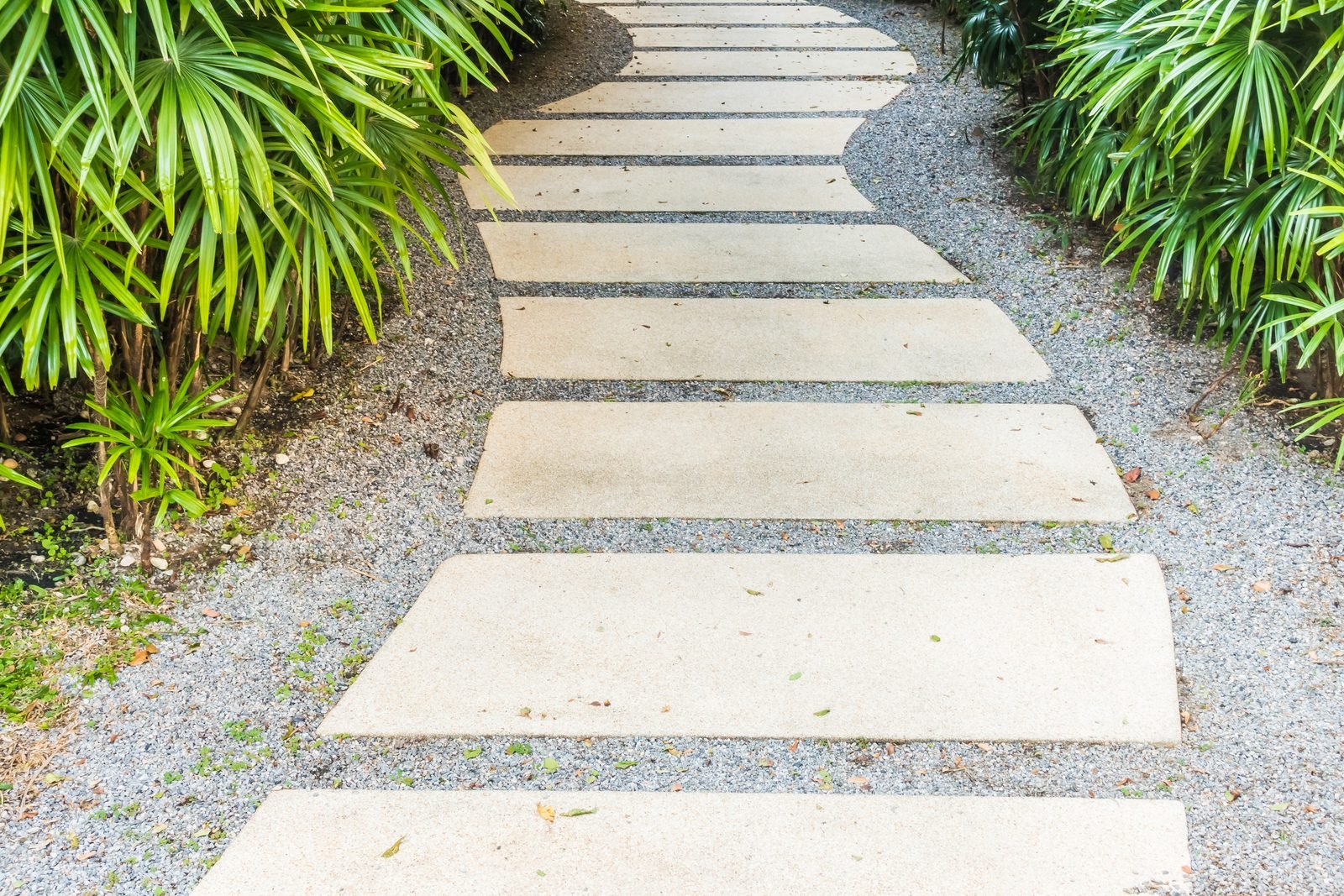
In a simple garden, the ground surface works as hard as the plants. Pea gravel and decorative crushed stone are inexpensive, drain rainwater well and give an instant finished look. Lay landscape fabric underneath to discourage weeds. Concrete or stone stepping stones set in gravel or grass create a firm path without sealing off all the soil.
Grass is welcome, but only where you will actually walk or sit. It needs mowing, feeding and watering during dry spells, and that adds up. If you want a lawn, match the grass to the light. In warm climates, three common choices are:
- Zoysia (Zoysia japonica): popular for sunny areas, with fine blades and a soft look.
- Broadleaf carpetgrass (Axonopus compressus): wider blades and better performance than zoysia in partial shade.
- Bahiagrass (Paspalum notatum): native to South America, it stands up to foot traffic but does not tolerate shade.
In cooler regions, ask a local garden center which grass suits your light and climate. Where shade defeats every grass, use shade-loving ground covers or simply gravel and a few pots.
Easy plants for a small garden
Choose tough species with predictable growth that match the light in your space. Including plants native to your region is a smart strategy, because they tend to cope better with the local climate. Not every plant below is hardy everywhere, so check the label or ask a nursery whether it will survive your winters. Toxicity information follows the ASPCA (American Society for the Prevention of Cruelty to Animals) plant database.
| Plant | Light | Why it is worth it | Watch out |
|---|---|---|---|
| Bougainvillea (Bougainvillea) | Full sun | Abundant blooms; does well on a wall or in a large container | Has thorns: keep it away from walkways |
| Surinam cherry (Eugenia uniflora) | Full sun | Small tree with edible fruit | Usually reaches 4–5 m (13–16 ft); leave room for the canopy |
| Lady palm (Rhapis excelsa) | Partial shade | Elegant palm for corners and containers | Non-toxic to dogs and cats |
| Bromeliads (Neoregelia) | Filtered light | Colorful foliage all year | Non-toxic; do not let water sit in the center for days |
| Rosemary (Salvia rosmarinus) | Full sun | Fragrant and drought-tolerant | Non-toxic |
| Basil (Ocimum basilicum) | Full sun | An everyday kitchen herb | Non-toxic; needs frequent watering |
| Lavender (Lavandula) | Full sun | Fragrance and lilac flowers | Toxic to dogs and cats |
| Snake plant (Dracaena trifasciata) | Sun to partial shade | Needs very little water | Toxic to dogs and cats |
Lavender contains linalool and linalyl acetate, which can cause nausea and vomiting in pets. Snake plant contains saponins, linked to vomiting and diarrhea. If you have pets, choose the non-toxic options or keep these species where animals cannot reach them.
If there is room for a tree, it will be the most striking feature of the garden. Choose a small species and plant it at a safe distance from walls, sidewalks and pipes; if in doubt, ask the nursery or a landscape designer how its roots behave. Over the years, its canopy will also cast more shade on the plants beneath it.
Pots, planters and raised beds
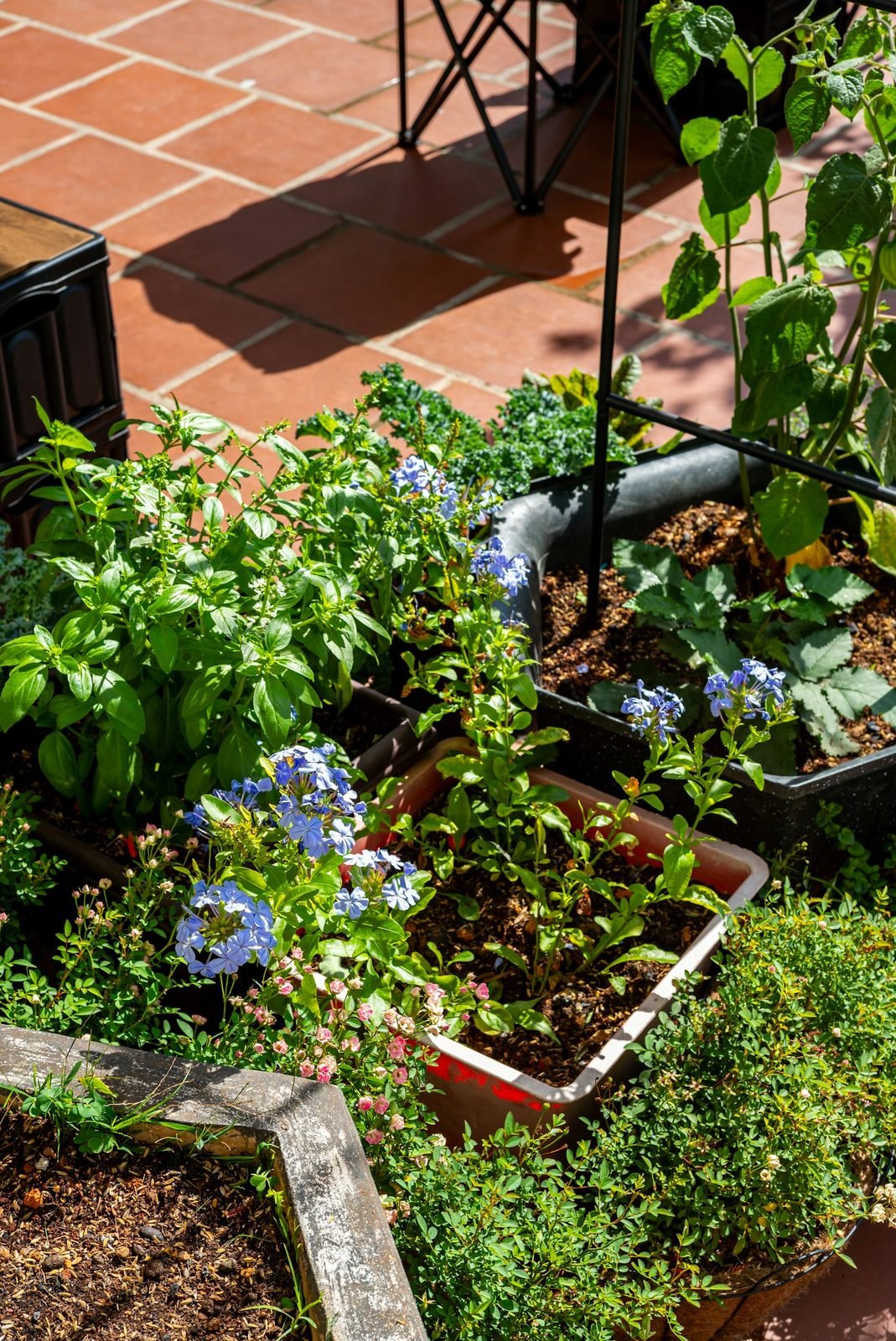
If the ground is fully paved, or you would rather not break up concrete, containers are the answer. Large pots hold moisture longer than several small ones and keep the arrangement cleaner. Make sure they have drainage holes and add a drainage layer before the potting mix.
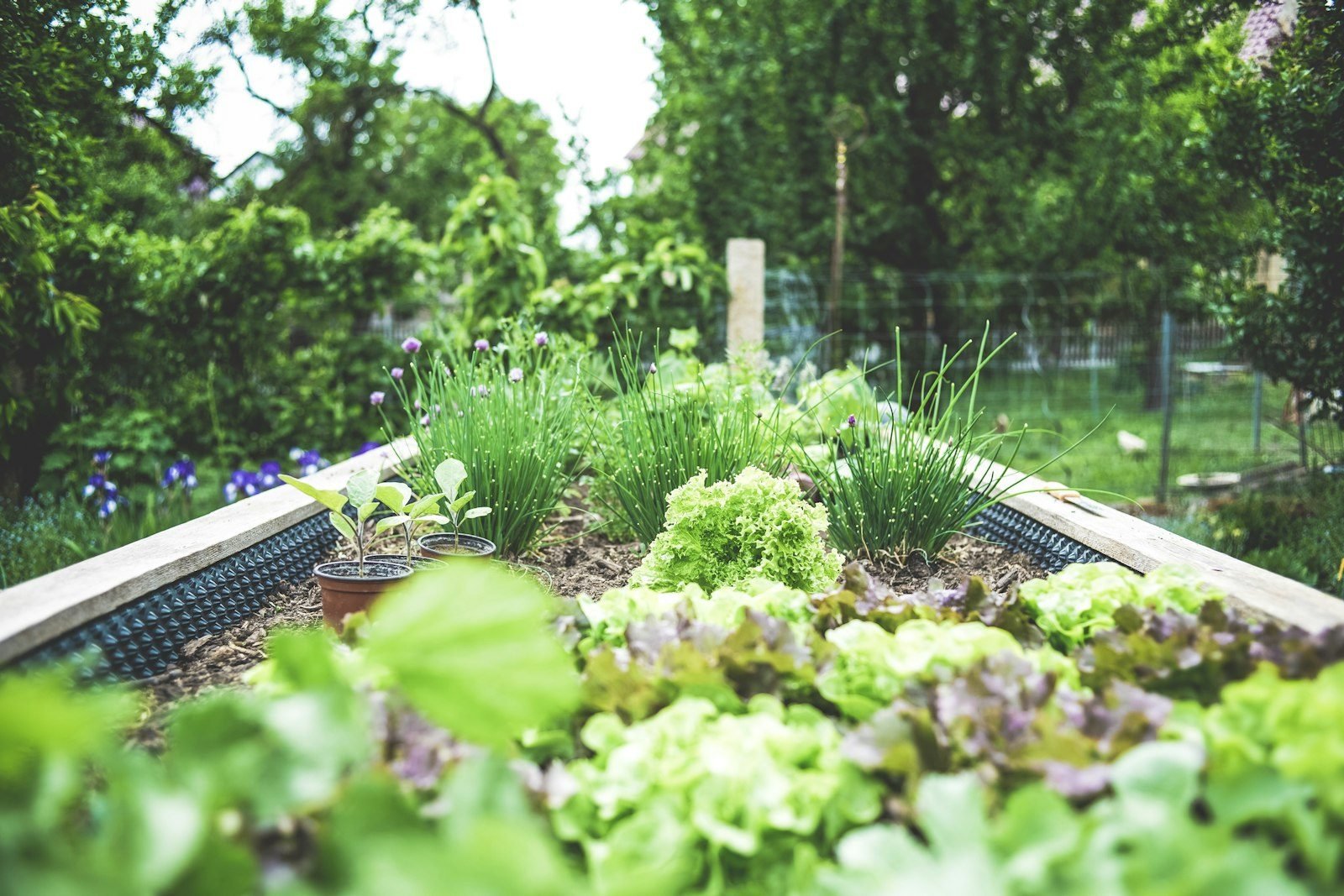
Raised beds in treated wood or masonry save you from bending down and are a tidy home for a small herb garden. Group plants by their water needs: basil and chives (Allium schoenoprasum) together, rosemary in its own pot, since it prefers drier soil. Note that chives are also listed as toxic to dogs and cats by the ASPCA.
If you run out of horizontal space, use the walls. A vertical garden takes greenery upward without using floor space. If all you have is a balcony, our guide to balcony plants covers species that handle wind and sun.
Checklist: your garden ready in a weekend
- Clear the area, remove debris and pull weeds out by the roots.
- Fix spots where water pools before you plant.
- Mark the path, planting bed and sitting area on the ground with string or a garden hose.
- Lay landscape fabric and spread gravel over the areas without plants.
- Prepare the beds with enriched soil, or fill the pots with good-quality potting mix.
- Plant the larger elements first, such as a tree or shrubs, and then the smaller plants.
- Water thoroughly on day one and keep an eye on the plants for the next few weeks.
- If you want garden lighting, hire a licensed electrician for the wiring.
Frequently asked questions
What is the cheapest way to create a small garden?
Combining gravel, a few large pots and hardy plants usually costs less than laying grass over the whole area. Prices vary by location and the materials you choose.
Can I have a garden in a fully paved backyard?
Yes. Pots, planters, raised beds and vertical structures let you grow plants without breaking up the paving, as long as the containers drain well.
Which plants need the least maintenance?
Once established, rosemary, snake plant and bougainvillea handle periods without water well. Lady palm and bromeliads are good options for partial shade.
How do I stop weeds from growing between the stones?
Use landscape fabric under the gravel and keep an even layer of stones. Pull any seedlings that appear by hand while they are still small.
Wrapping up
A small, simple garden comes from good choices, not from lots of things. Start with the basics, watch how the plants respond and add details little by little. To plan the outdoor space of your whole home, read our guide to home landscape design. And tell us in the comments what your space is like: we would love to swap ideas.
Featured image: Photo: Hikari Graf / Unsplash