

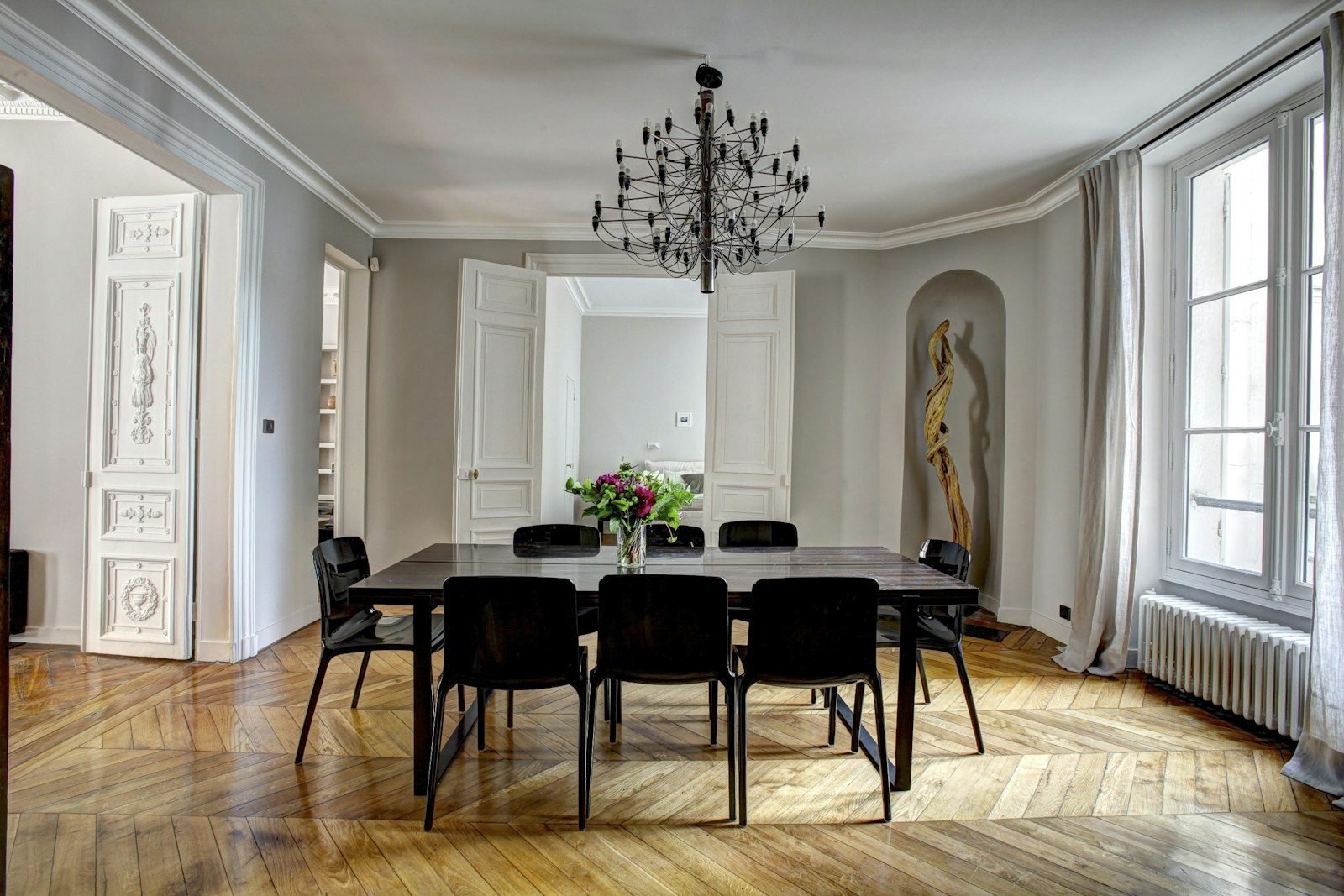
The best dining room decorating ideas start with something less glamorous than a beautiful table: how the room is actually used. This is where weekday breakfasts happen, where Sunday lunch stretches into the afternoon, where conversations linger after dessert and, quite often, where the laptop comes out for a few hours of work. The space has to function well before it can impress.
In this guide you’ll find reference measurements, tips for choosing a table and chairs, lighting advice, the role of rugs, mirrors and sideboards, and practical solutions for small spaces. The goal is to help you create a dining room that feels like your home, whether it’s shared by a couple, a big family or friends living together.
Start with how you really use the room
Before thinking about colors and accessories, answer three simple questions: how many people eat together on a typical day? How often do you host guests? Will the table also be used for studying, working or hobbies?
Those answers shape almost every decision. If you rarely entertain, a smaller table plus a few folding chairs stored elsewhere may be enough. If you host often, an extendable table pays off. If the table doubles as a desk, you’ll want even lighting and chairs that stay comfortable for hours.
Look at how the dining area connects to the rest of the home, too. In many houses and apartments it shares space with the living room or kitchen, so the palette, materials and style should speak the same language. If you’re rethinking your lounge area as well, see our guide to living room decorating ideas.
Measurements that prevent a cramped room
One of the most common mistakes is choosing a table based on how it looks in the showroom rather than the size of your room. A few rules of thumb used by interior designers help avoid that:
- Space per person: about 60 cm (24 in) of table width per seat, so nobody bumps elbows.
- Clearance behind chairs: at least 90 cm (36 in) between the table edge and a wall or other furniture, so someone can walk past a seated guest.
- Near sideboards and busy walkways: leave extra room, since doors and drawers need to open too.
- Rug: it should extend roughly 60 cm (24 in) beyond the table on every side, so chairs stay on it when pulled out.
These are starting points, not strict rules. It’s worth testing: mark the outline of the table on the floor with painter’s tape, set the chairs in place and practice sitting down and getting up.
Choosing the table and chairs
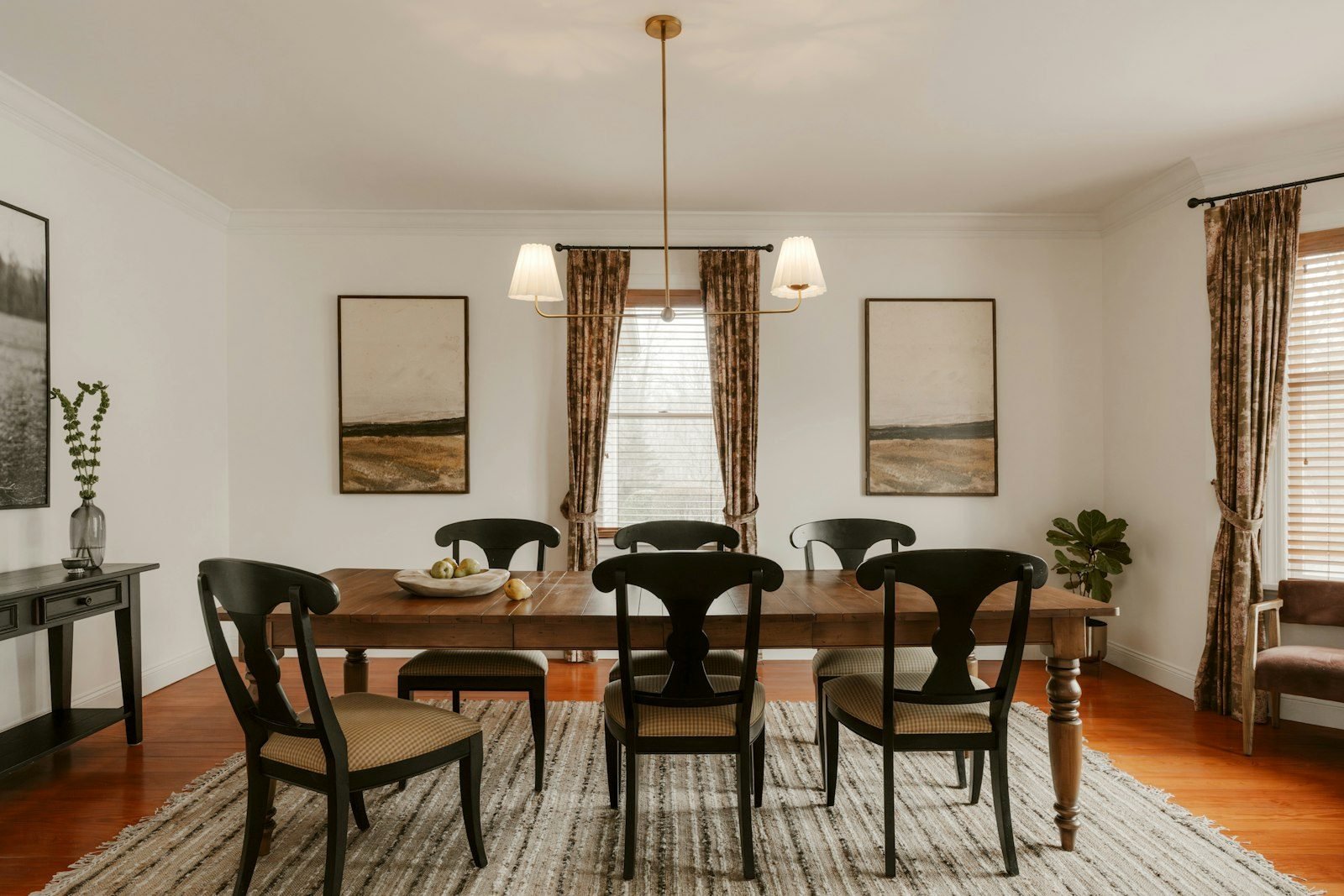
The table’s shape changes how the room feels and flows. Here’s a quick comparison:
| Shape | Best for | Watch out for |
|---|---|---|
| Rectangular | Long rooms and larger households | Needs a clear walkway along both sides |
| Square | Square rooms and up to four people | With more seats, the center feels far from everyone |
| Round | Small spaces and closer conversation | Large diameters take up a lot of floor area |
| Oval | Rectangular capacity with softer corners | Usually fewer ready-made options |
| Extendable | Occasional hosting | Test the mechanism before you buy |
Wood brings warmth; glass makes the room feel lighter; stone and engineered surfaces handle heavy use but may need care with stains, depending on the finish. With chairs, comfort comes first: sit for a few minutes before buying. A bench on one side and chairs on the other adds personality.
Lighting: the real focal point
Light is what turns the dining table into the heart of the room. A pendant or chandelier should be centered over the table, not over the room. If the table sits off-center, move the light point too, with help from a licensed electrician.
As a reference, many designers suggest hanging the bottom of the pendant about 75 cm (30 in) above the tabletop, adjusting up or down for the size of the fixture and the height of the people at home. For long tables, two or three smaller pendants in a row often work better than a single large piece.
Choose warm white bulbs for meals and, if you can, install a dimmer to adjust the mood. To understand color temperature and layered lighting in more depth, read our article on home lighting design.
Mirror and sideboard: a practical pair
Mirrors are a dining room classic for a practical reason: they bounce light around and add a sense of depth, which helps most in small rooms or spaces with few windows. A few tips:
- Place the mirror so it reflects something attractive, such as a window, a piece of art or the pendant itself, rather than a blank wall or a bathroom door.
- On long walls, a horizontal mirror follows the line of the table; on narrow walls, a vertical one makes the ceiling feel higher.
- Large mirrors should be hung with hardware rated for their weight and your wall type.
A sideboard completes the setup. It holds serving dishes during meals, stores tableware and linens, and displays decorative objects. Choose a depth that respects the clearance you have and, ideally, doors or drawers to hide what doesn’t need to be on show.
Walls, colors and rugs
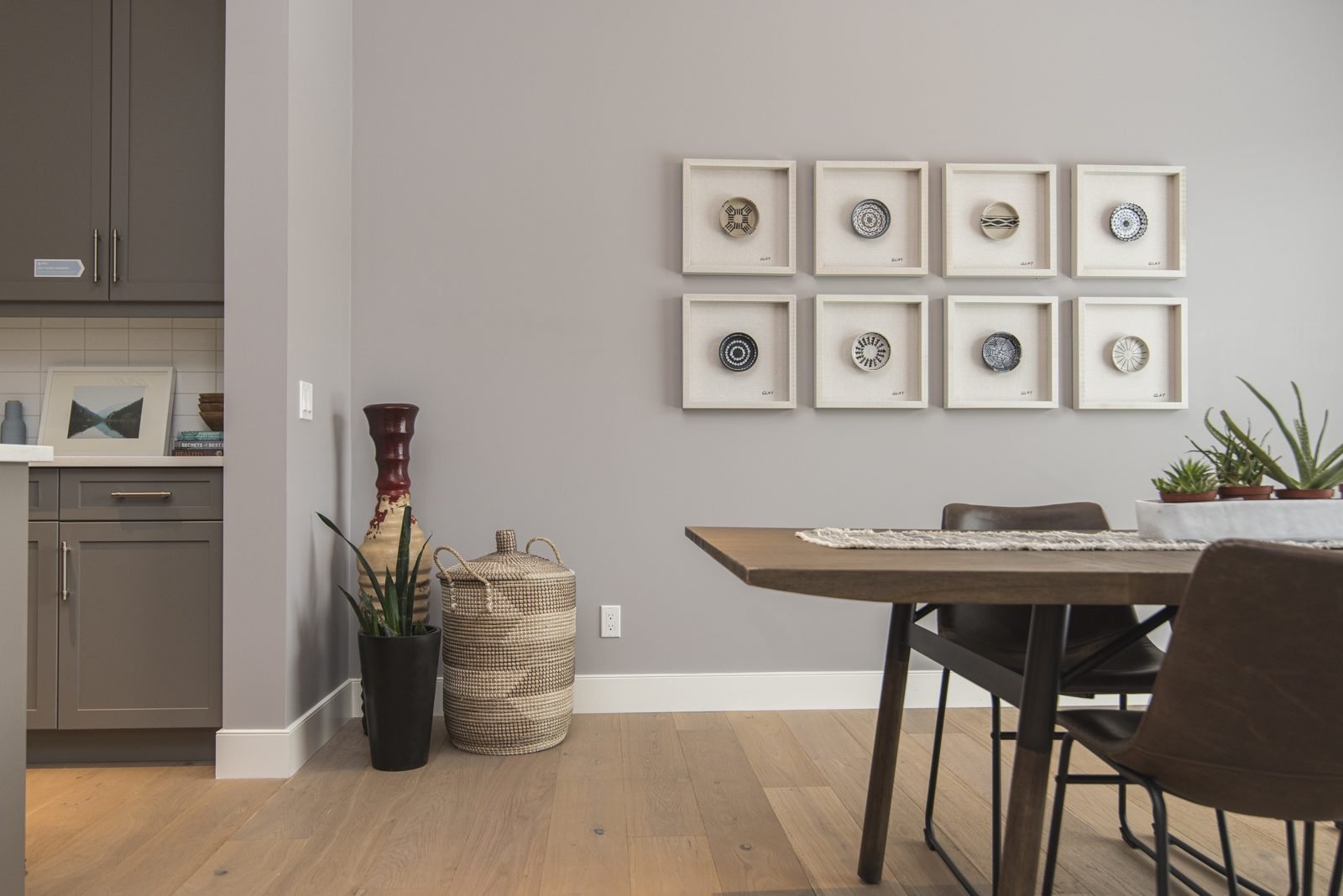
The main wall of the dining room deserves special attention. Options that work well:
- Gallery wall: a symmetrical grid feels orderly; a freeform arrangement feels relaxed.
- Earthy or soft green paint: creates a welcoming mood without tiring the eye.
- Wallpaper or wood slat panels: add texture and work well behind a sideboard or bench.
The rug, in turn, defines the dining zone, which is especially useful in open-plan spaces. Low-pile or flat-weave rugs make it easier to move chairs and sweep up crumbs. Mid-tone colors hide small stains better.
Small dining room: smart solutions
Limited space doesn’t rule out a charming dining area. These strategies help:
- Banquette seating: a bench against the wall takes up less room than chairs and can include storage underneath.
- Round pedestal table: seats more people without legs getting in the way.
- Clear or slim-framed chairs: reduce visual weight.
- Wall shelves instead of a sideboard: free up floor space while keeping a serving surface.
- A mirror on one wall: visually expands the room and reflects daylight.
Centerpieces and finishing touches
The centerpiece is the easiest element to change throughout the year. Low arrangements work best, so nobody has to lean around them to talk. A tray with a vase of flowers, a few candles and a fruit bowl covers most days.
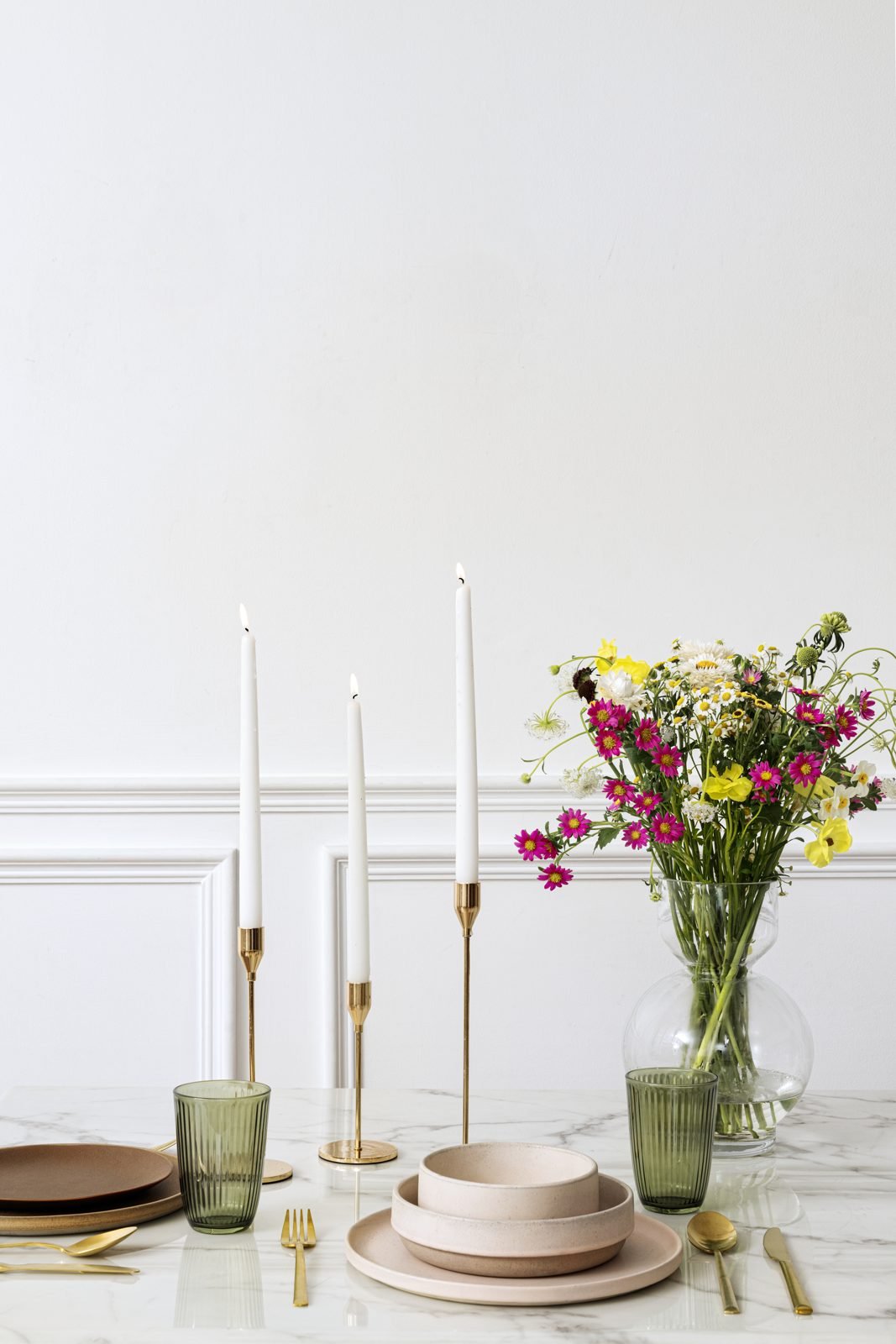
Two important precautions: never leave lit candles unattended, especially near fabrics, curtains, children or pets. And if you have cats, be careful with flowers: according to the ASPCA, true lilies (Lilium) and daylilies (Hemerocallis) are highly toxic to cats, even in small amounts. When in doubt, check the ASPCA’s plant list before bringing an arrangement home.
On special occasions, the table becomes the star of the show. For holiday inspiration, see our ideas for Christmas table decorations.
Quick dining room checklist
- Table with about 60 cm (24 in) per seat and at least 90 cm (36 in) of clearance around it.
- Chairs tested and comfortable for long meals.
- Pendant centered over the table, hung at a height that doesn’t cause glare.
- Warm light and, ideally, a dimmer.
- A rug that extends past the table and is easy to clean.
- A mirror reflecting something worth seeing.
- A sideboard or shelf for serving.
- A low, pet-safe centerpiece.
Frequently asked questions
What size table do I need for four people?
A common reference is about 60 cm (24 in) of width per seat. Square and round tables seat four comfortably in compact rooms; always check for roughly 90 cm (36 in) of clearance around them.
Where should a mirror go in a dining room?
On a wall where it can reflect daylight, artwork or the pendant. Above the sideboard is the most traditional spot, because it creates a balanced vignette and keeps the mirror out of the way of bumps.
Is a rug a good idea under a dining table?
Yes, as long as it’s big enough that chairs stay on it when pulled out, and it has a low pile or flat weave that’s easy to clean.
Can I mix different dining chairs?
Absolutely. To make it look intentional, keep one element in common, such as color, material or seat height.
Conclusion
Great dining room decorating balances comfortable measurements, well-placed lighting and objects that tell the story of the people who live there. Start with real-life use, respect the clearance and save the details for last. Which of these ideas will you try first? Tell us in the comments!
Featured image: Photo: yann maignan / Unsplash
Leave a Reply