

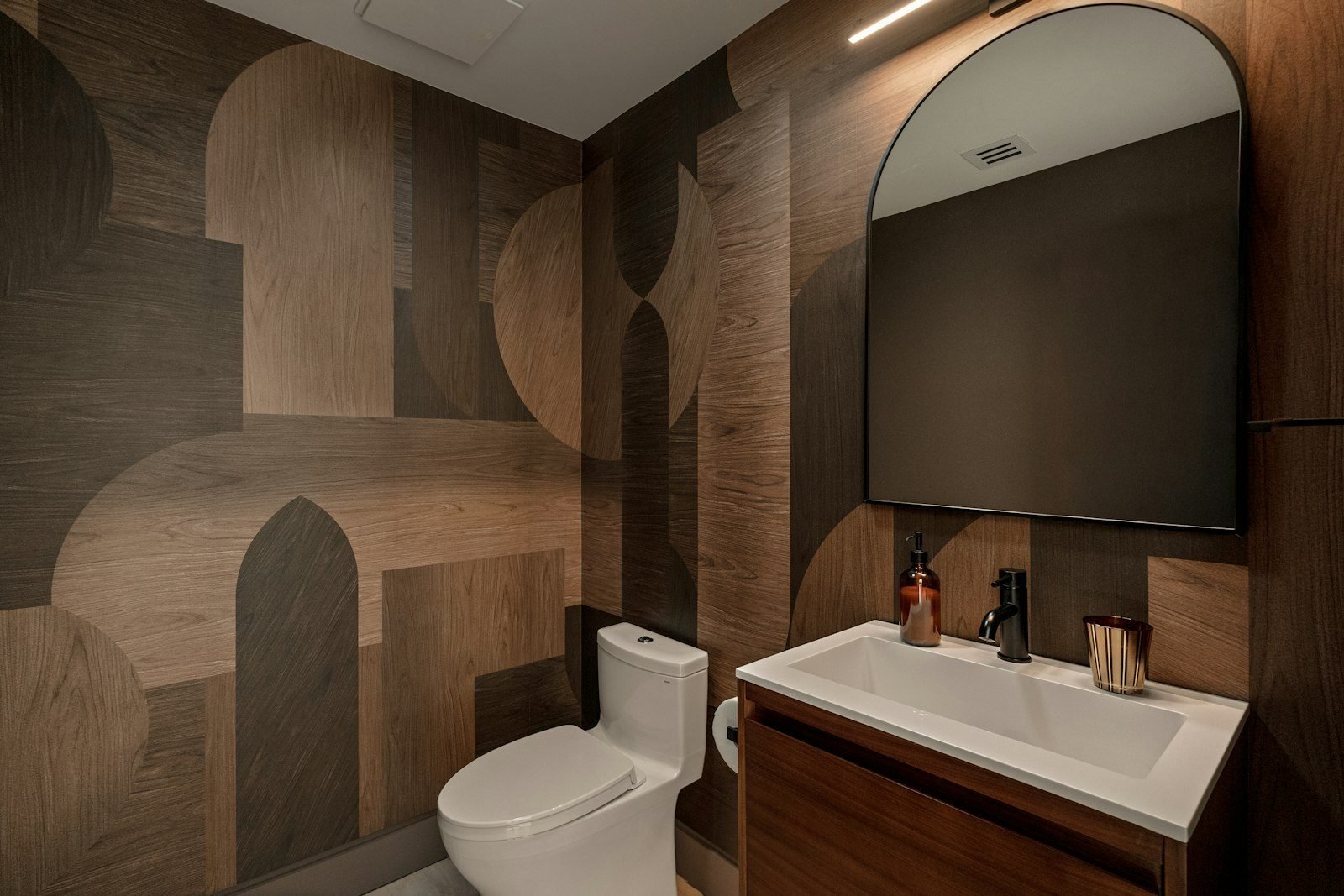
Plenty of people rule out bathroom wallpaper because they fear mold, bubbles and peeling seams. The worry is reasonable, but it doesn’t have to be a hard no. With the right material, careful wall prep and good ventilation, wallpaper can turn an ordinary bathroom into a space with real personality — no demolition required, and usually for far less than replacing tile.
In this guide, you’ll learn which wallpaper types handle humidity best, which walls are worth covering (and which aren’t), how to prepare the surface, which patterns work in small spaces and how to keep everything looking good for years. The goal is simple: make a confident decision before you buy the first roll.
Can you really put wallpaper in a bathroom?
You can, with some judgment. The bathroom sees bigger swings in humidity and temperature than any other room in the house, and shower steam is wallpaper’s main enemy: it softens the adhesive, creeps into the seams and creates ideal conditions for mildew. So the right question isn’t “yes or no,” but “which bathroom, which wall and which wallpaper.”
The easiest case is the powder room, or half bath, with just a toilet and a sink and no shower steam. Almost any good-quality wallpaper works there. In a full bathroom, the smart approach is to choose vinyl and focus on the walls farthest from the shower, leaving wet zones covered in tile, porcelain or another material designed for direct contact with water.
One important warning: if a wall has leaks, rising damp or recurring mold stains, wallpaper won’t fix it — it hides the problem and makes it worse. Before decorating, have a professional find the cause and repair it.
Wallpaper types: which ones handle humidity best
Material makes all the difference. Traditional paper (cellulose) wallpapers are the most sensitive to water and belong in dry rooms. Vinyl wallpapers have a plastic surface layer that repels splashes and can be wiped clean with a damp cloth. Here is how the main options compare:
| Type | Moisture resistance | Cleaning | Where to use it |
|---|---|---|---|
| Solid vinyl | High | Washable; a damp cloth and mild soap are fine | Full bathrooms (away from the shower) and powder rooms |
| Fabric- or paper-backed vinyl | Good | Washable | Well-ventilated bathrooms and powder rooms |
| Non-woven | Medium | Lightly damp cloth | Powder rooms and rarely used bathrooms |
| Traditional paper | Low | Dusting or a dry cloth only | Very dry powder rooms only |
| Natural fibers (grasscloth, sisal) | Low | Difficult; water leaves stains | Avoid in bathrooms |
On the label, look for the washability symbols: wave icons mean the wallpaper can be cleaned with a damp sponge, and waves with a brush mean it can be scrubbed. If the manufacturer’s specifications don’t mention humid rooms, take that as a sign to choose another product. The same logic applies to kitchens, as we explain in our guide to washable kitchen wallpaper.
Where to hang it and where to skip it
Mapping the zones of your bathroom makes the decision much clearer:
- Inside the shower: don’t use wallpaper. Even vinyl isn’t made to take a direct spray of water every day.
- Behind the sink: vinyl can work here, but protect the strip right above the basin (with a large mirror, a band of tile or glass) to avoid constant splashing.
- Behind the toilet: often the best choice for an accent wall in a full bathroom.
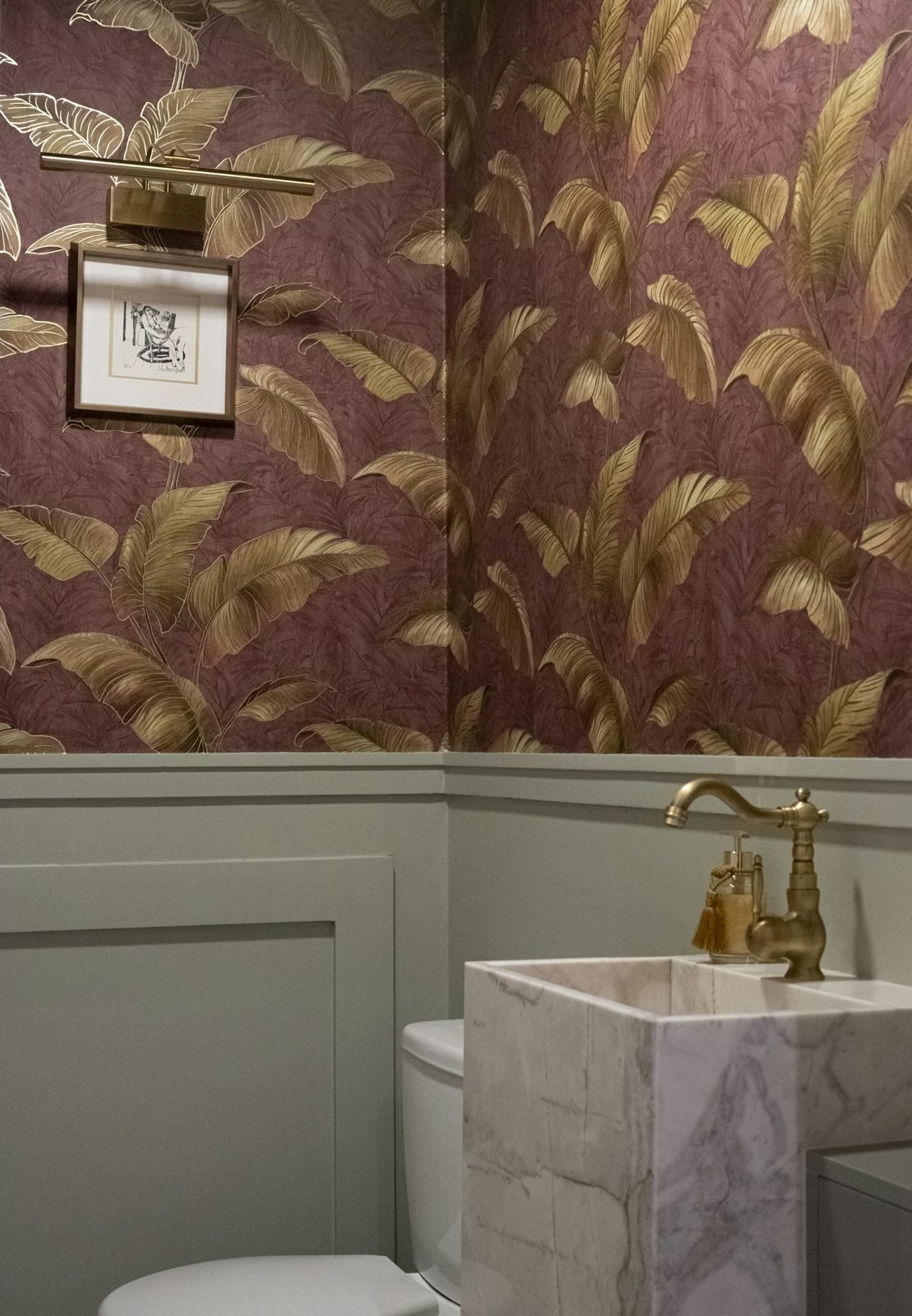
- Half wall: pairing tile, wainscoting or washable paint on the lower part with wallpaper above is both attractive and practical.
- Ceiling: works in powder rooms; in bathrooms with a shower, steam rises and collects there, so it’s best avoided.
In a full bathroom, a single accent wall is usually enough to change the whole look, with less risk and less material.
Ventilation and wall preparation
How long wallpaper lasts depends more on preparation than on the pattern. Before hanging, the wall must be dry, smooth, clean and free of flaking paint. Fill holes and cracks with joint compound and sand them flat. A coat of suitable primer helps the adhesive bond evenly and makes future removal much easier.
Choose an adhesive rated for humid rooms, ideally with mildew resistance, and follow the wallpaper manufacturer’s instructions exactly. Seams are the weakest point, so press them down firmly and wipe away excess paste with a clean sponge. If you plan to do the job yourself, our step-by-step guide on how to hang wallpaper covers the tools and the right sequence.
After that, ventilation is what keeps the result looking good. Run the exhaust fan during your shower and for a few minutes afterward, leave the door or window open so steam can escape, and avoid hanging wet towels against the wallpaper. If the bathroom has neither a window nor a fan, any new exhaust system should be installed by a licensed electrician — and it may be wise to tackle that upgrade before thinking about wallpaper.
Patterns and colors for every style
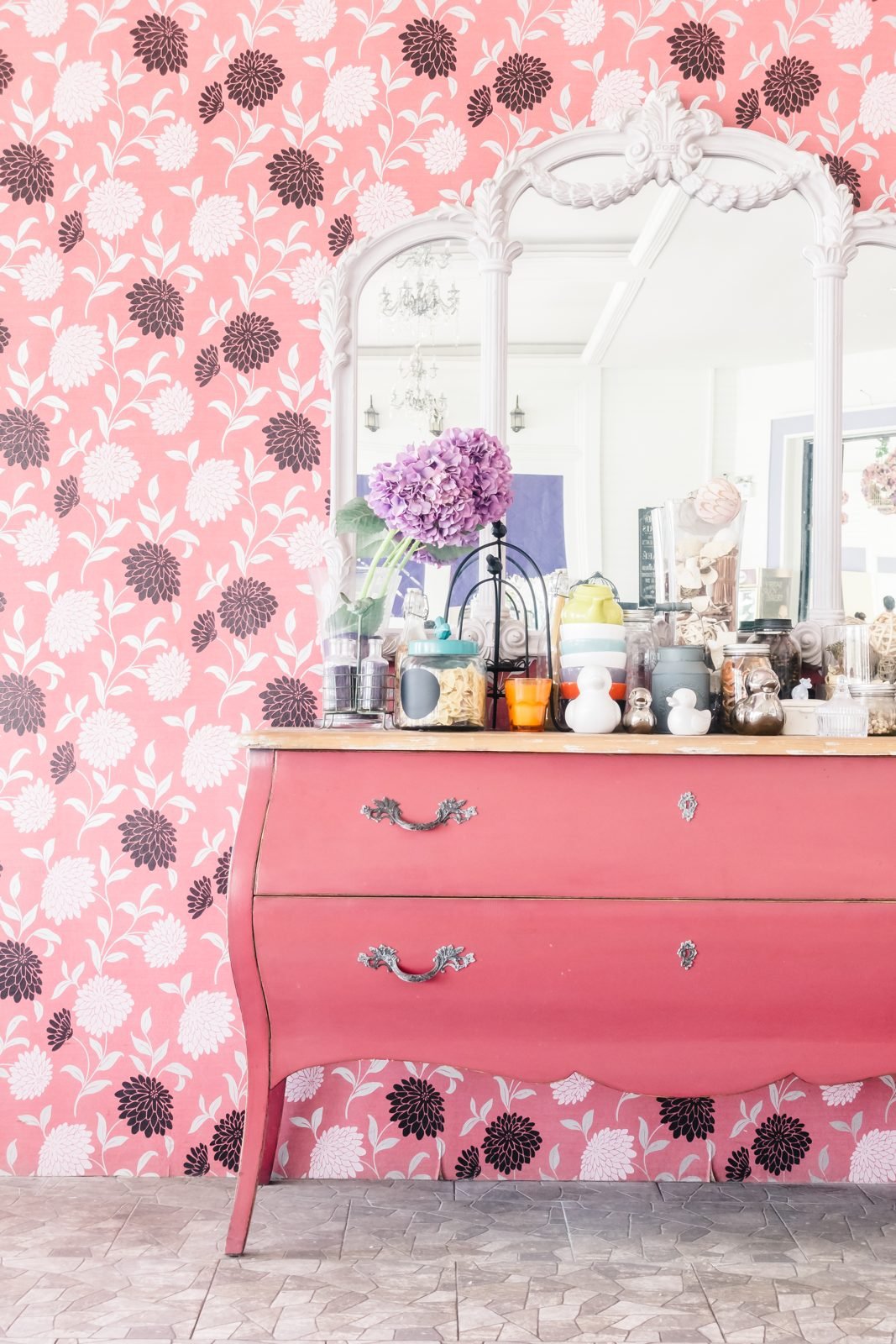
The bathroom is a great place to take risks, precisely because you don’t spend long stretches of time there. A print that might feel tiring in a bedroom can be charming in a powder room. A few ideas that work well:
- Botanicals and florals: they feel fresh and pair well with brass fixtures, wood and plants. On a dark background, they create an intimate mood.
- Geometrics: diamonds, arches and stripes bring a contemporary feel and suit white fixtures and black hardware.
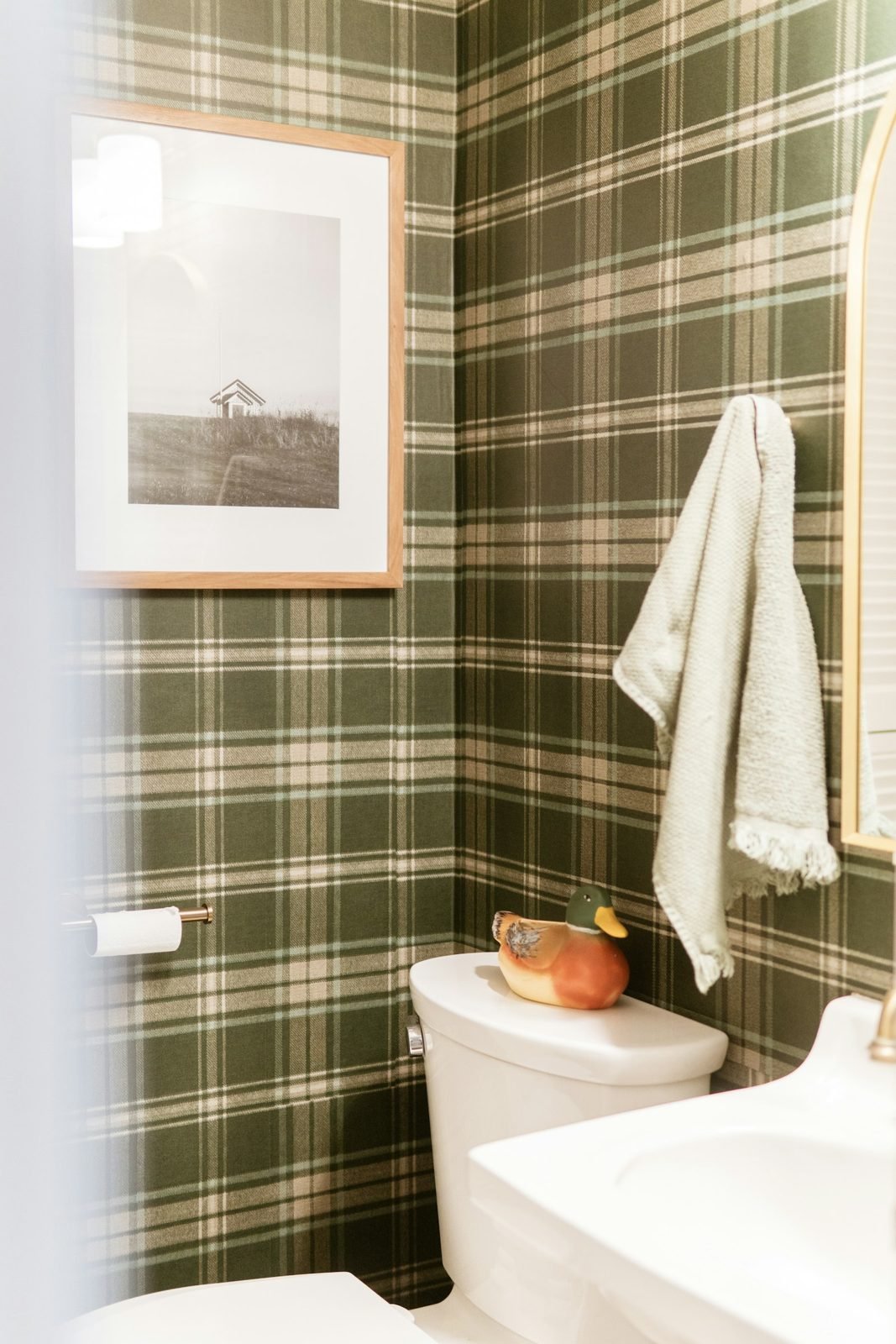
- Plaids and classic stripes: they nod to English style and look elegant with wainscoting and framed art.
- Faux finishes: marble, wood, concrete or linen looks add sophistication without the cost and weight of the real material.
- Light, neutral tones: the safe bet if you want the room to feel bigger or like to change your decor often.
Think about the whole room: if the floor and vanity already have a strong pattern, pick a quieter wallpaper. If everything is plain and white, the wallpaper can be the star.
Wallpaper in small bathrooms and powder rooms
In tight spaces, wallpaper has a surprising effect: instead of making the room feel smaller, it often adds depth and makes the space look intentional. A few practical rules help:
- Vertical stripes make ceilings feel taller; horizontal stripes make narrow walls feel wider.
- Medium-scale patterns usually work better than tiny prints, which can look busy up close.
- A large mirror repeats the pattern and makes the room feel more open.
- Warm, evenly distributed lighting brings out texture and dark colors.
For more ideas on storage, fixtures and lighting in compact bathrooms, see our guide to small bathroom ideas. If you rent, peel-and-stick removable wallpaper can be a good option for a powder room; test it first on a hidden spot and check your lease.
Checklist before you buy and install
- Is the wall dry, with no signs of leaks or mold?
- Is the wallpaper vinyl, or recommended by the manufacturer for humid rooms?
- Will the shower area stay wallpaper-free?
- Is there an exhaust fan or window to let steam out?
- Is the adhesive suitable for humid rooms?
- Did you calculate the quantity with extra for pattern matching (the pattern repeat)?
- If any electrical or ventilation work is needed, is a licensed professional involved?
The cost of wallpaper and installation varies with your location, the material and the finish, so it’s worth getting more than one quote.
Frequently asked questions
Does wallpaper in a bathroom get moldy?
It can if there’s constant humidity, poor ventilation or a leak behind the wall. With vinyl wallpaper, an adhesive made for humid rooms, an effective exhaust fan and some distance from the shower, the risk drops considerably.
Can I put wallpaper inside the shower?
It isn’t recommended. Even washable wallpapers aren’t designed to take a daily spray of water. In wet zones, stick to materials made for the job, such as ceramic, porcelain or mosaic tile.
What is the best wallpaper for a powder room?
Because a powder room doesn’t get shower steam, it can take most good-quality wallpapers. Even so, a washable option makes it easier to clean the wall near the sink.
How do I clean bathroom wallpaper?
Follow the label. In general, vinyl wallpapers can be wiped with a soft, slightly damp cloth and mild soap. Wipe along the seams, dry right away and avoid scrubbing hard.
Conclusion
Bathroom wallpaper is a quick, expressive way to refresh the room, as long as you respect three things: moisture-resistant material, protected wet zones and steady ventilation. Starting with a powder room or a single accent wall is the safest way to test the idea. Would you try a bold print in your bathroom? Tell us in the comments.
Featured image: Photo: Peter Muniz / Unsplash
Leave a Reply