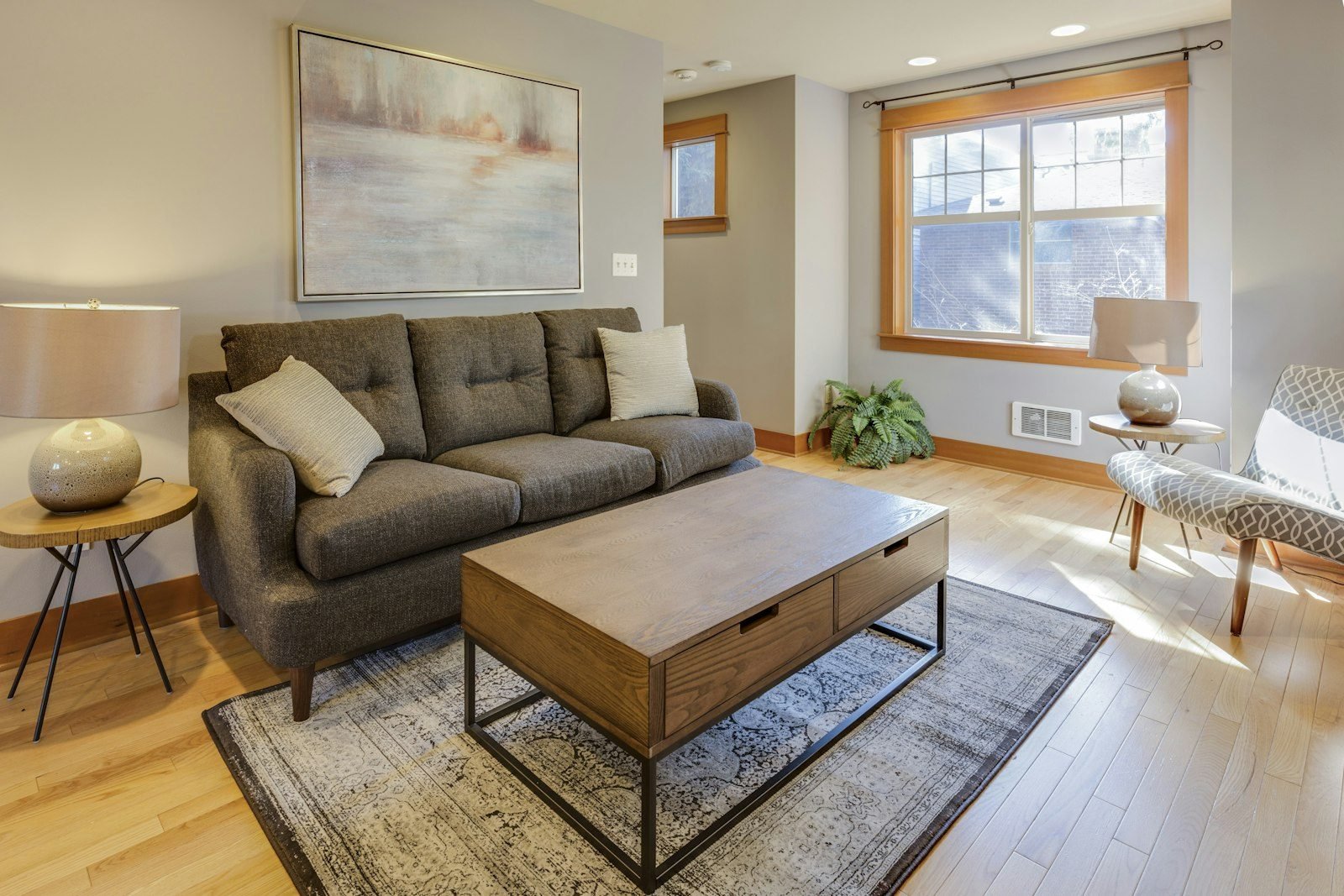
The best small living room ideas don’t depend on square footage; they depend on smart choices. In a compact space, the living room often juggles several jobs: hosting friends, watching movies, working on a laptop and sometimes even eating meals. When every piece of furniture and every color has a reason to be there, the room feels lighter, looks better and is easier to use.
Below is a practical step-by-step guide, from measurements to lighting, with solutions for compact apartments and houses with narrow living rooms.
Measure before you buy any furniture
The most common mistake in small living rooms is choosing a sofa from the showroom floor instead of from the floor plan. Before buying anything, sketch the room on graph paper or in a floor-plan app, mark the doors, windows, outlets and TV location, and only then place the furniture.
Two reference measurements help a lot. Interior design guides typically recommend 40 to 60 cm (16 to 24 in) between the sofa and the coffee table, and at least 60 cm (24 in) of clear passage between pieces of furniture. Any less and the room becomes an obstacle course.
Use the plan to define a focal point: the TV, a beautiful window or a gallery wall. Arranging the seating around a single focus keeps furniture from looking scattered and shows at a glance how the space is meant to be used.
Checklist before you decorate
- What does the living room need to handle day to day?
- How many people usually sit there at the same time?
- What are the walking paths between the front door, the kitchen and the bedrooms?
- Where are the outlets and the cable or internet connections?
- Where does the natural light come from, and at what time of day?
- Is there anything you need to disguise, such as an electrical panel or exposed wires?
Light colors and visual continuity
Light colors reflect more light and help a room feel bigger. White, off-white, sand, light gray and pastels are safe bets for walls and ceilings. That doesn’t mean giving up on color: the secret is continuity.
- Tone on tone: walls, curtains and sofa in variations of the same color family blur the edges of the room.
- Accent wall: a single wall in a deeper shade adds depth, especially the back wall opposite the entrance.
- Continuous flooring: in open-plan spaces, using the same flooring throughout the living areas makes everything feel more spacious.
- Color in the details: pillows, artwork and throws add personality and are easy to swap out.
If you can’t decide on a shade, our guide to living room color ideas offers combinations and examples for different styles.
A sofa and furniture that fit
The sofa is the largest piece in the room and shapes everything else. In small spaces, look for slim arms or none at all, a lower back and visible legs. Seeing the floor beneath your furniture creates a sense of lightness and makes cleaning easier.
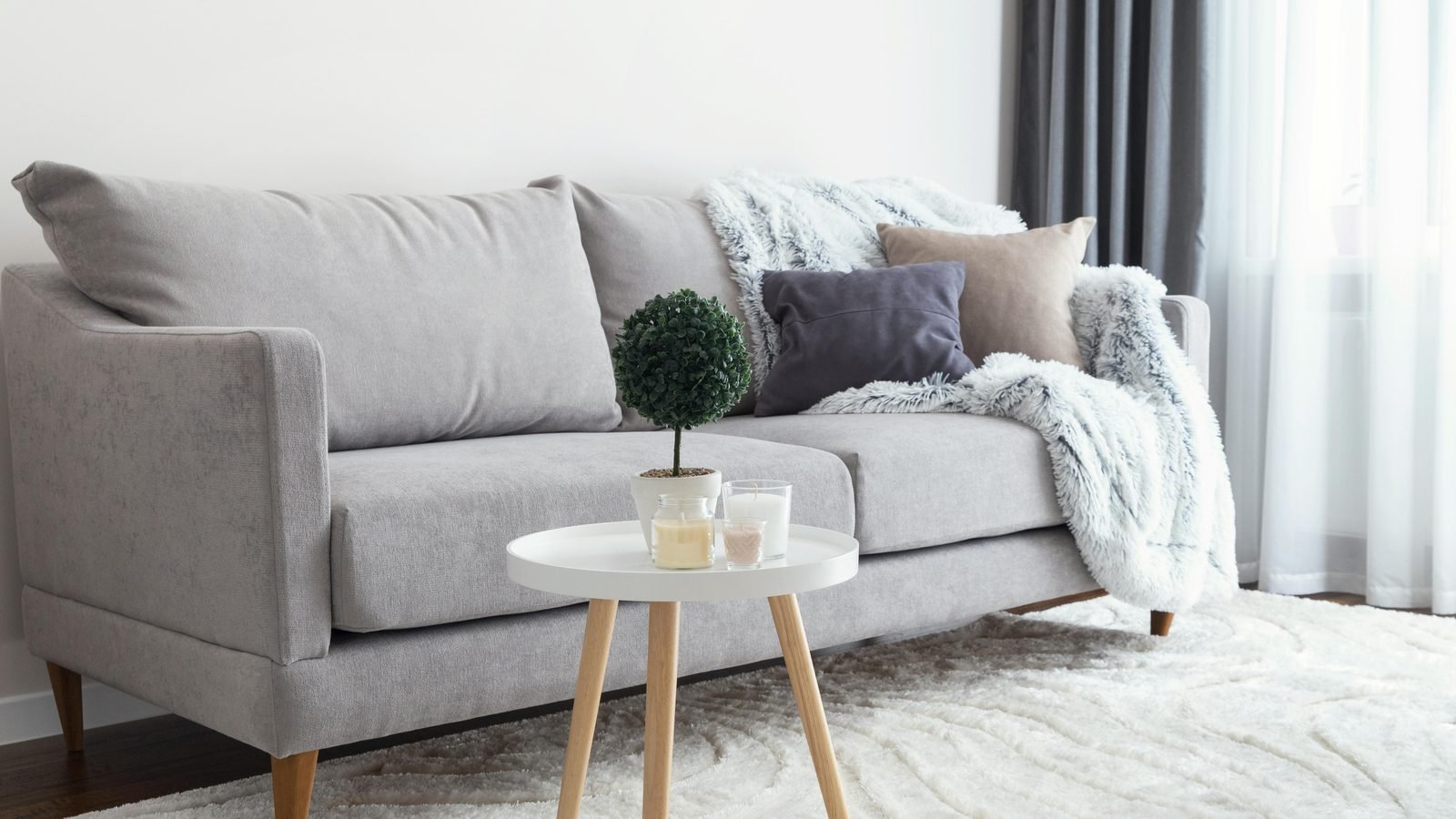
Be careful with extendable-seat sofas: they’re comfortable, but pulled out they can block the walkway, so check the measurements fully extended before you buy. If you host a crowd only now and then, a couple of poufs or stools that move around the house beat an oversized sofa.
For the coffee table, there are two routes: a piece with drawers or a lift-top that hides remotes and magazines, or small nesting tables you can move aside when you need space. Glass tops and rounded shapes also make it easier to get around.
Furniture that pulls double duty
In a small living room, every piece has to earn its place. Storage ottomans hold throws and provide extra seating. A narrow console behind the sofa becomes a spot for a lamp and your laptop. Benches can double as side tables, and a wall-mounted drop-leaf table handles quick meals without getting in the way the rest of the day.
What about the rug?
A rug that’s too small makes the room look smaller. Ideally, it should be large enough for at least the front legs of the sofa and armchairs to rest on it, tying the seating area together. Light, solid colors or subtle patterns preserve the sense of space.
Make your walls work for you
When floor space is at a premium, walls become usable space. Shelves, niches and wall-mounted bookcases store books and decor off the floor and draw the eye upward, making the ceiling feel higher.
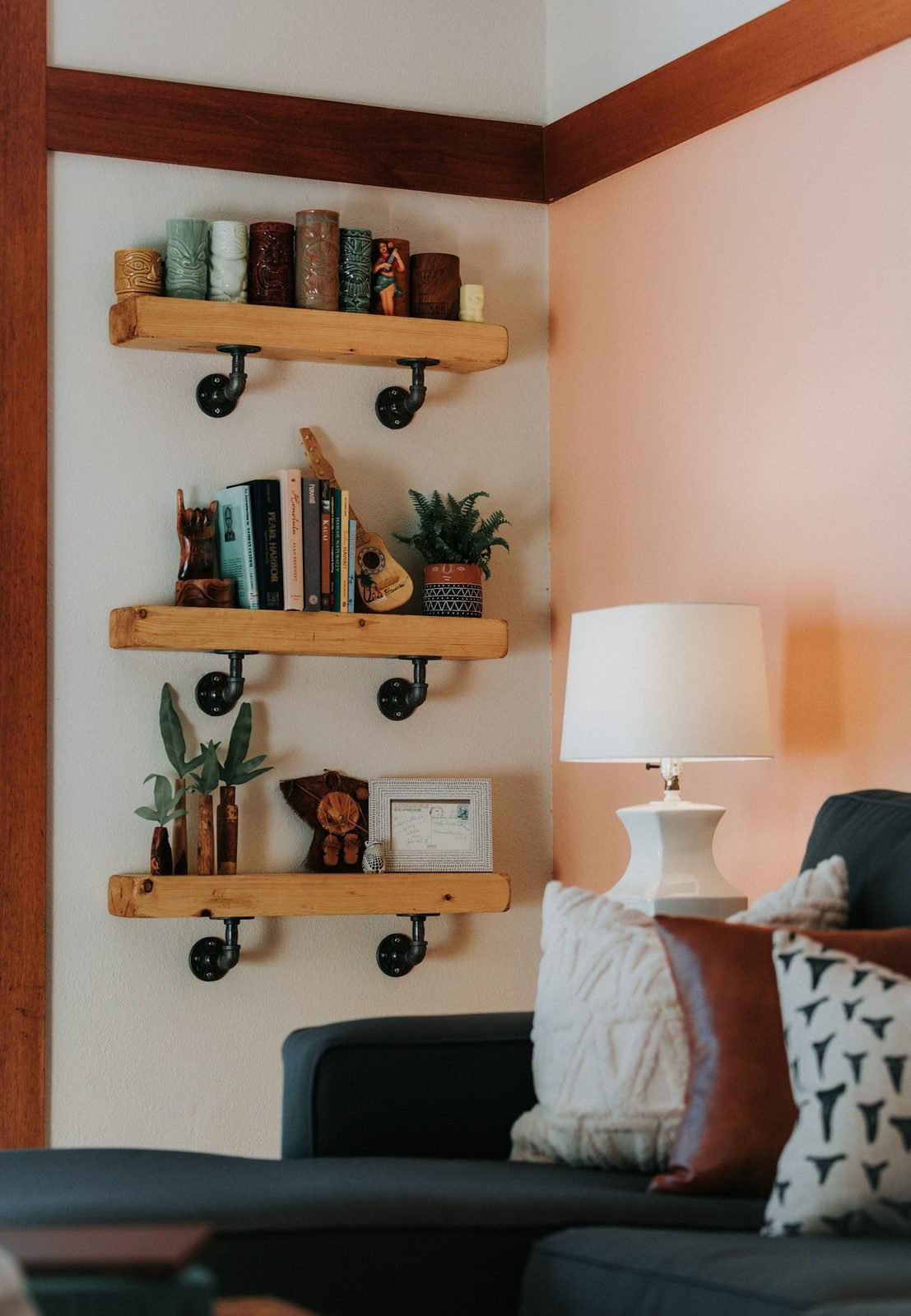
- Floating media console or TV wall panel: frees up the floor and lets you hide cables inside the panel.
- Corner shelves: put to use a stretch of wall that usually sits empty.
- Floor-to-ceiling bookcase: concentrates storage on one wall and leaves the others clearer.
- Aligned artwork: a gallery arranged along a shared baseline or center line conveys a sense of order.
Before drilling, check whether the wall is masonry or drywall, use anchors and screws rated for the weight, and avoid areas where pipes run. When in doubt, call a professional.
Mirrors, lighting and curtains
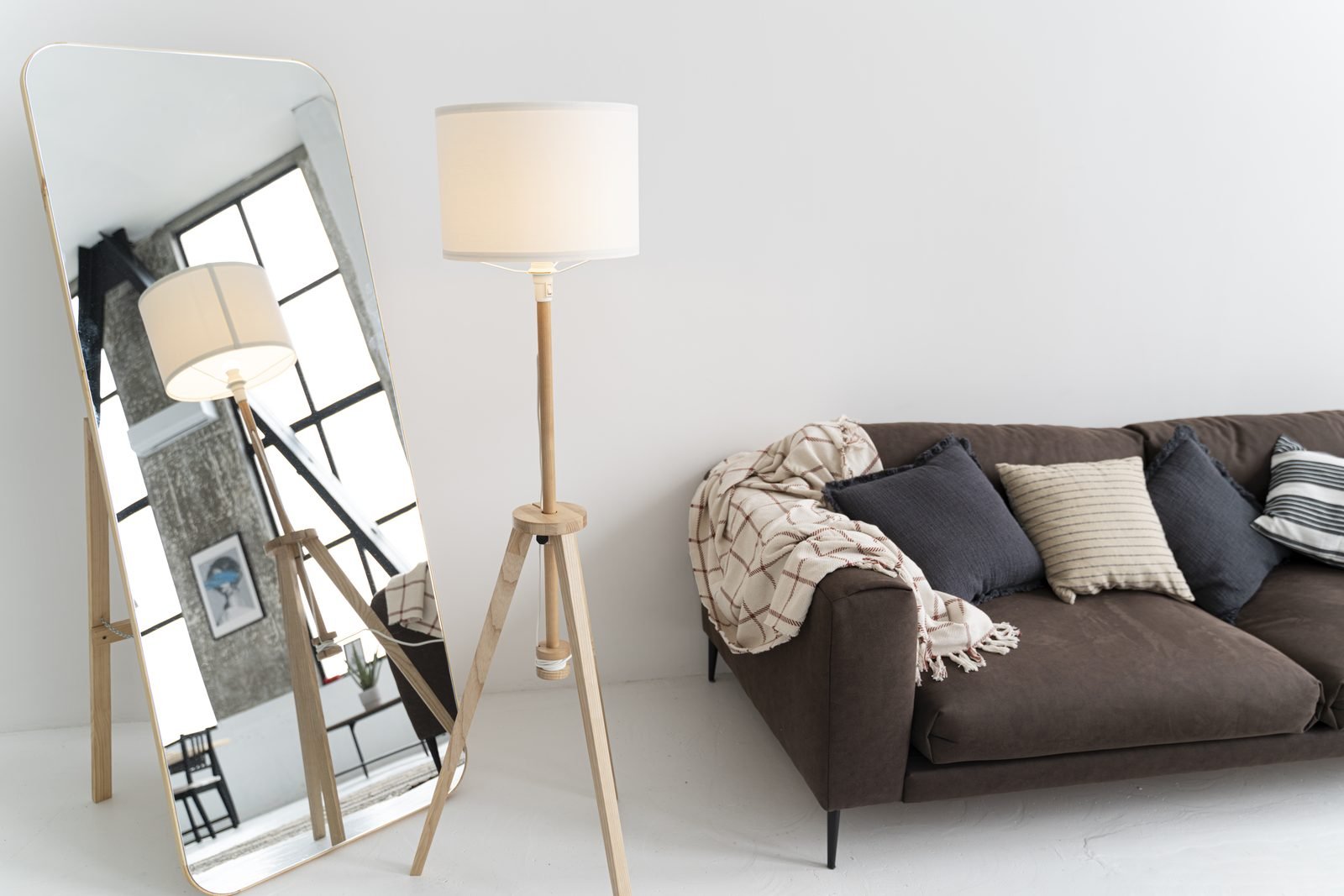
Mirrors are a time-tested way to make a room feel larger, because they reflect light and create depth. The best spot is usually a wall facing or beside the window, where a mirror multiplies the natural light. A large floor mirror leaned against the wall, like the one in the photo below, needs no drilling and is ideal for renters.
For lighting, avoid relying on a single fixture in the center of the ceiling. Combine general lighting with a floor lamp, a table lamp and, if you like, LED strips in niches or behind the TV panel. For the seating area, warm white bulbs of around 2700K make the space feel inviting. If you need new outlets or fixtures, hire a licensed electrician. See more ideas in our guide to home lighting design.
At the windows, mount the curtain rod close to the ceiling and let the curtains touch the floor, extending past the width of the window. Lightweight fabrics such as sheer voile and linen filter sunlight without darkening the room.
Common small living room mistakes (and how to avoid them)
| Mistake | Why it’s a problem | What to do instead |
|---|---|---|
| A sofa that’s too big | Blocks the walkway and dominates the room | Measure first and favor slim arms and visible legs |
| Lots of small pieces scattered around | Creates visual clutter | Fewer, more functional pieces |
| A small rug | Breaks the room into fragments | Choose a size that anchors the whole seating area |
| Short curtains | Make the ceiling look lower | Rod close to the ceiling and fabric down to the floor |
| A single light source | Leaves dark corners and a flat mood | Layered lighting with accent lamps |
| Objects on every surface | Feels messy | Group a few items and use boxes and baskets |
Notice that almost all of these mistakes share the same root: excess. Before buying something new, clear out what you don’t use and live with the room for a few days. Often, the space you were missing was there all along.
Frequently asked questions
What is the best color for a small living room?
Light shades such as white, off-white, sand and light gray are the safest choices for walls and ceilings because they reflect more light. Color can come in through an accent wall or through accessories and textiles.
Can I use dark colors in a small living room?
Yes. A well-lit dark wall creates depth and makes the room feel cozy. The key is balancing it with a lighter ceiling, floor or furniture and good artificial lighting.
What size sofa is best for a small living room?
It depends on the available wall and the walkways. Measure the space, subtract the clearance you need and, if possible, room for a side table. In general, a two- or three-seat sofa with slim arms makes better use of the area than a bulky sectional.
How do you decorate a small living room that opens onto the kitchen?
Use the same palette in both areas and define zones with a rug, lighting and furniture placement. The back of the sofa can mark the edge of the seating area. You’ll find more ideas in our guide to small apartment decorating.
Final thoughts
Decorating a small living room is an exercise in choosing: fewer pieces, more function and close attention to light. Start with the measurements, settle on a palette and move forward gradually, testing what works in your daily life. What’s the biggest challenge in your living room? Tell us in the comments and keep exploring the other guides on the blog.
Featured image: Photo: Francesca Tosolini / Unsplash