Decor Home and Garden

Decorating, plants and landscaping ideas for every home

Tag: small living room

  • Small Living Room Ideas: How to Gain Space and Comfort

    Small Living Room Ideas: How to Gain Space and Comfort

    The best small living room ideas don’t depend on square footage; they depend on smart choices. In a compact space, the living room often juggles several jobs: hosting friends, watching movies, working on a laptop and sometimes even eating meals. When every piece of furniture and every color has a reason to be there, the room feels lighter, looks better and is easier to use.

    Below is a practical step-by-step guide, from measurements to lighting, with solutions for compact apartments and houses with narrow living rooms.

    Measure before you buy any furniture

    The most common mistake in small living rooms is choosing a sofa from the showroom floor instead of from the floor plan. Before buying anything, sketch the room on graph paper or in a floor-plan app, mark the doors, windows, outlets and TV location, and only then place the furniture.

    Two reference measurements help a lot. Interior design guides typically recommend 40 to 60 cm (16 to 24 in) between the sofa and the coffee table, and at least 60 cm (24 in) of clear passage between pieces of furniture. Any less and the room becomes an obstacle course.

    Use the plan to define a focal point: the TV, a beautiful window or a gallery wall. Arranging the seating around a single focus keeps furniture from looking scattered and shows at a glance how the space is meant to be used.

    Checklist before you decorate

    • What does the living room need to handle day to day?
    • How many people usually sit there at the same time?
    • What are the walking paths between the front door, the kitchen and the bedrooms?
    • Where are the outlets and the cable or internet connections?
    • Where does the natural light come from, and at what time of day?
    • Is there anything you need to disguise, such as an electrical panel or exposed wires?

    Light colors and visual continuity

    Light colors reflect more light and help a room feel bigger. White, off-white, sand, light gray and pastels are safe bets for walls and ceilings. That doesn’t mean giving up on color: the secret is continuity.

    • Tone on tone: walls, curtains and sofa in variations of the same color family blur the edges of the room.
    • Accent wall: a single wall in a deeper shade adds depth, especially the back wall opposite the entrance.
    • Continuous flooring: in open-plan spaces, using the same flooring throughout the living areas makes everything feel more spacious.
    • Color in the details: pillows, artwork and throws add personality and are easy to swap out.

    If you can’t decide on a shade, our guide to living room color ideas offers combinations and examples for different styles.

    A sofa and furniture that fit

    The sofa is the largest piece in the room and shapes everything else. In small spaces, look for slim arms or none at all, a lower back and visible legs. Seeing the floor beneath your furniture creates a sense of lightness and makes cleaning easier.
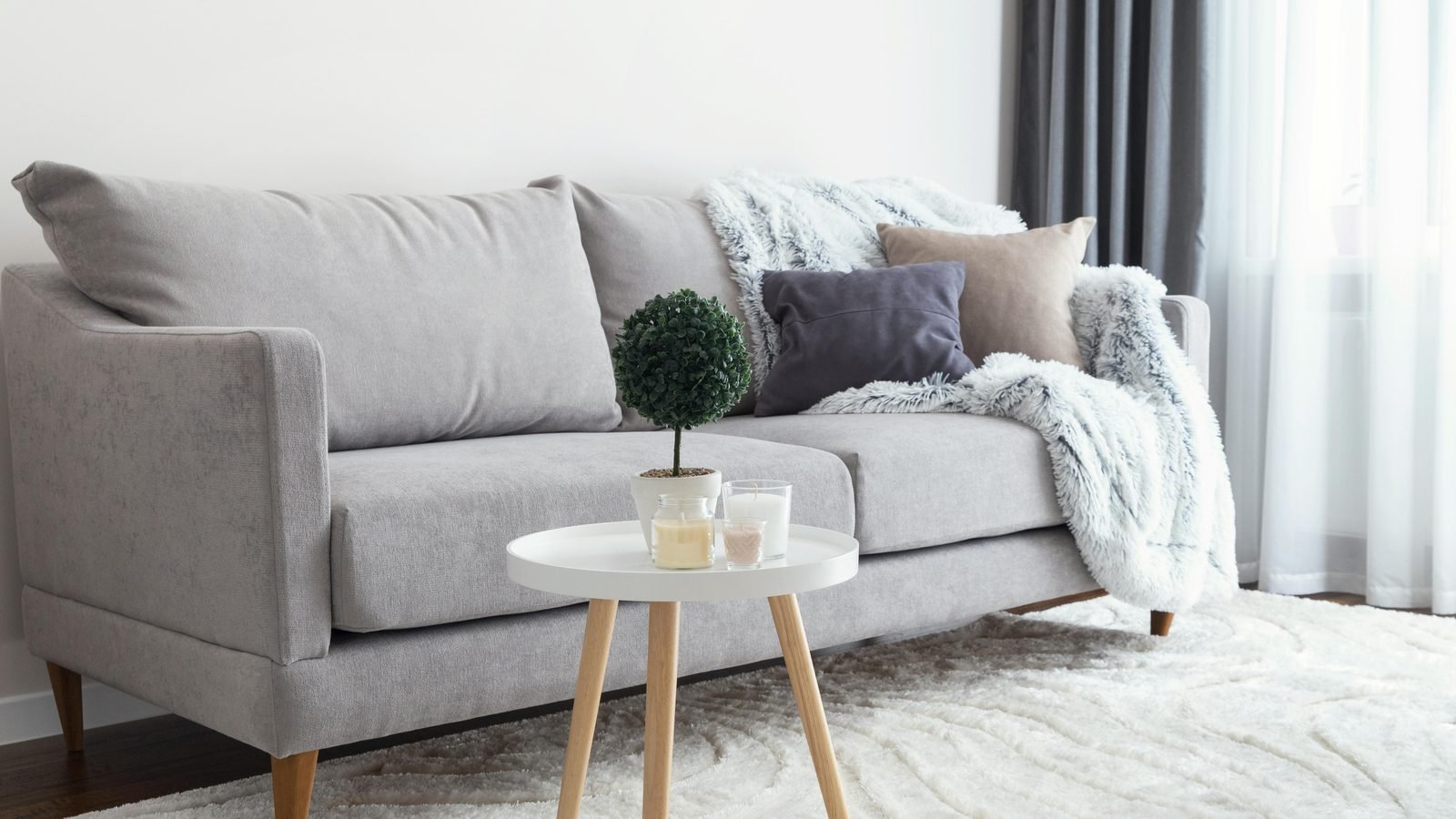
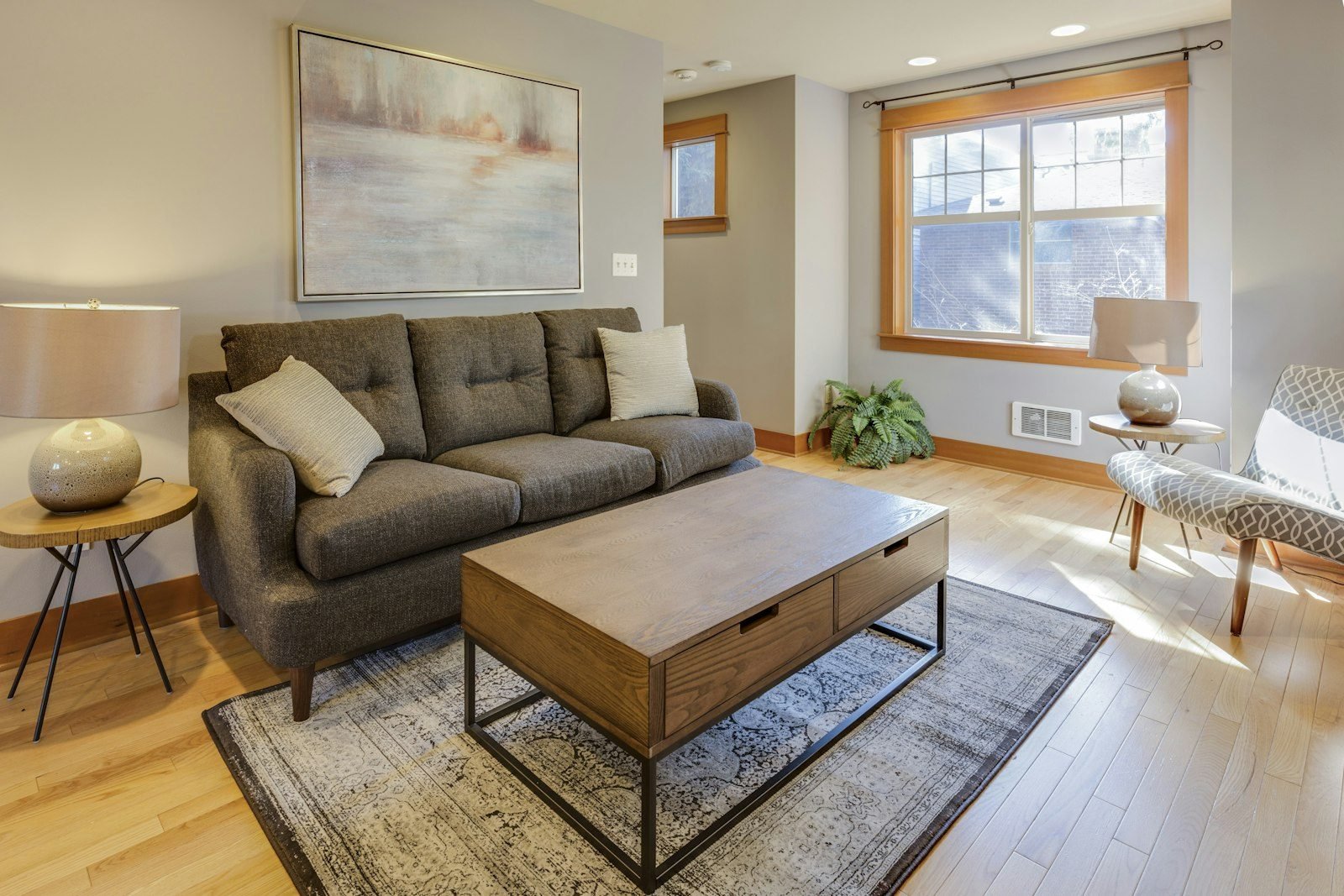
    Gray sofa with slim arms and wooden legs, a round white side table, a light shaggy rug and two layers of curtains
    Slim arms, exposed legs and a light side table: less visual bulk without sacrificing comfort. Image: Freepik

    Be careful with extendable-seat sofas: they’re comfortable, but pulled out they can block the walkway, so check the measurements fully extended before you buy. If you host a crowd only now and then, a couple of poufs or stools that move around the house beat an oversized sofa.

    For the coffee table, there are two routes: a piece with drawers or a lift-top that hides remotes and magazines, or small nesting tables you can move aside when you need space. Glass tops and rounded shapes also make it easier to get around.

    Furniture that pulls double duty

    In a small living room, every piece has to earn its place. Storage ottomans hold throws and provide extra seating. A narrow console behind the sofa becomes a spot for a lamp and your laptop. Benches can double as side tables, and a wall-mounted drop-leaf table handles quick meals without getting in the way the rest of the day.

    What about the rug?

    A rug that’s too small makes the room look smaller. Ideally, it should be large enough for at least the front legs of the sofa and armchairs to rest on it, tying the seating area together. Light, solid colors or subtle patterns preserve the sense of space.

    Make your walls work for you

    When floor space is at a premium, walls become usable space. Shelves, niches and wall-mounted bookcases store books and decor off the floor and draw the eye upward, making the ceiling feel higher.
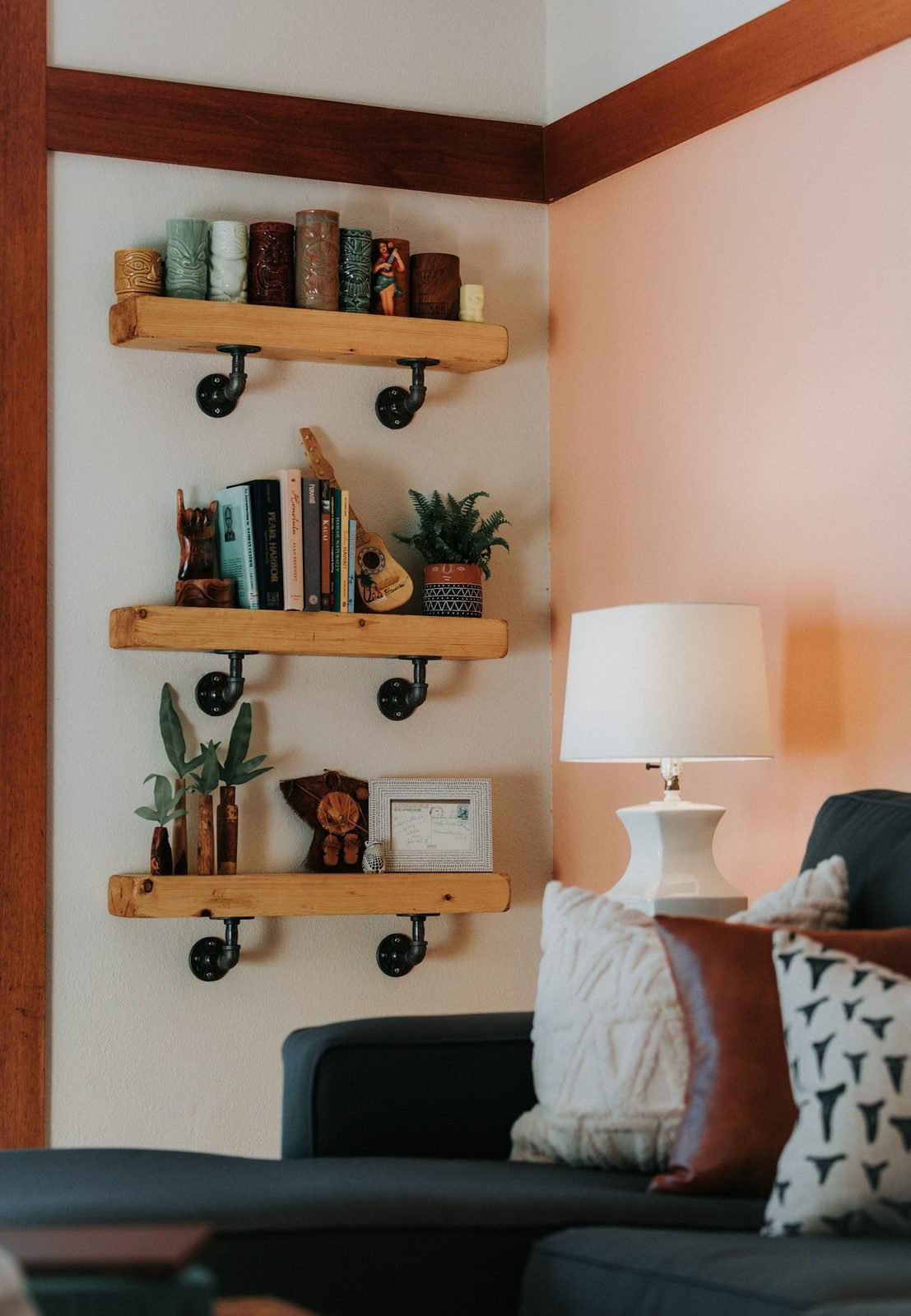
    Three wooden shelves on black brackets in the corner of a living room, holding books, vases and decor, next to a sofa and a lamp
    Corner shelves make use of wall height without eating into walking space. Photo: Zane Persaud / Unsplash
    • Floating media console or TV wall panel: frees up the floor and lets you hide cables inside the panel.
    • Corner shelves: put to use a stretch of wall that usually sits empty.
    • Floor-to-ceiling bookcase: concentrates storage on one wall and leaves the others clearer.
    • Aligned artwork: a gallery arranged along a shared baseline or center line conveys a sense of order.

    Before drilling, check whether the wall is masonry or drywall, use anchors and screws rated for the weight, and avoid areas where pipes run. When in doubt, call a professional.

    Mirrors, lighting and curtains

    Mirrors are a time-tested way to make a room feel larger, because they reflect light and create depth. The best spot is usually a wall facing or beside the window, where a mirror multiplies the natural light. A large floor mirror leaned against the wall, like the one in the photo below, needs no drilling and is ideal for renters.
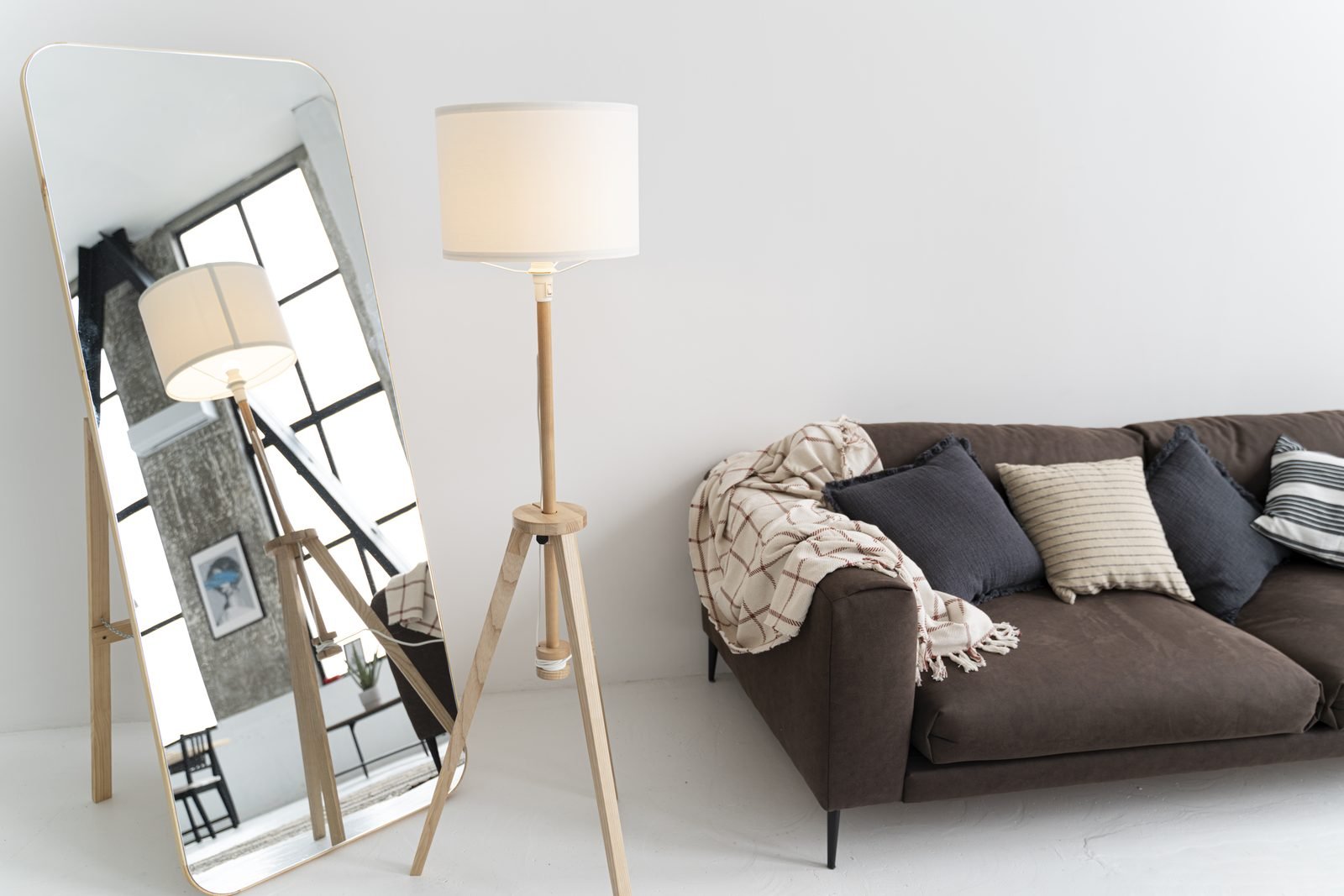
    Large wood-framed mirror leaning on the floor, a tripod floor lamp with a white shade and a brown sofa with pillows
    A leaning floor mirror and a floor lamp: more depth and accent lighting with no renovation. Image: Freepik

    For lighting, avoid relying on a single fixture in the center of the ceiling. Combine general lighting with a floor lamp, a table lamp and, if you like, LED strips in niches or behind the TV panel. For the seating area, warm white bulbs of around 2700K make the space feel inviting. If you need new outlets or fixtures, hire a licensed electrician. See more ideas in our guide to home lighting design.

    At the windows, mount the curtain rod close to the ceiling and let the curtains touch the floor, extending past the width of the window. Lightweight fabrics such as sheer voile and linen filter sunlight without darkening the room.

    Common small living room mistakes (and how to avoid them)

    Mistake Why it’s a problem What to do instead
    A sofa that’s too big Blocks the walkway and dominates the room Measure first and favor slim arms and visible legs
    Lots of small pieces scattered around Creates visual clutter Fewer, more functional pieces
    A small rug Breaks the room into fragments Choose a size that anchors the whole seating area
    Short curtains Make the ceiling look lower Rod close to the ceiling and fabric down to the floor
    A single light source Leaves dark corners and a flat mood Layered lighting with accent lamps
    Objects on every surface Feels messy Group a few items and use boxes and baskets

    Notice that almost all of these mistakes share the same root: excess. Before buying something new, clear out what you don’t use and live with the room for a few days. Often, the space you were missing was there all along.

    Frequently asked questions

    What is the best color for a small living room?

    Light shades such as white, off-white, sand and light gray are the safest choices for walls and ceilings because they reflect more light. Color can come in through an accent wall or through accessories and textiles.

    Can I use dark colors in a small living room?

    Yes. A well-lit dark wall creates depth and makes the room feel cozy. The key is balancing it with a lighter ceiling, floor or furniture and good artificial lighting.

    What size sofa is best for a small living room?

    It depends on the available wall and the walkways. Measure the space, subtract the clearance you need and, if possible, room for a side table. In general, a two- or three-seat sofa with slim arms makes better use of the area than a bulky sectional.

    How do you decorate a small living room that opens onto the kitchen?

    Use the same palette in both areas and define zones with a rug, lighting and furniture placement. The back of the sofa can mark the edge of the seating area. You’ll find more ideas in our guide to small apartment decorating.

    Final thoughts

    Decorating a small living room is an exercise in choosing: fewer pieces, more function and close attention to light. Start with the measurements, settle on a palette and move forward gradually, testing what works in your daily life. What’s the biggest challenge in your living room? Tell us in the comments and keep exploring the other guides on the blog.

    Featured image: Photo: Francesca Tosolini / Unsplash
  • Living Room Color Ideas: Palettes and Combinations That Work

    Living Room Color Ideas: Palettes and Combinations That Work

    When you’re redecorating or moving, sorting through living room color ideas is often the step that causes the most second-guessing. The living room is the most visible space in the home: it’s where you welcome guests, unwind and, quite often, work or share meals. A well-chosen color makes the room feel warm and cohesive; the wrong one can start to wear on your eyes within a few weeks.

    The good news: there’s no mystery to it. With a few simple principles, tried-and-true palettes and a proper test before you paint, you can get it right without relying on luck. In this guide, we’ve gathered combinations that work, smart moves for small living rooms and specific suggestions for the TV room.

    How color changes the way a living room feels

    Before thinking about trendy shades, it helps to understand the effect each color family has. Broadly speaking:

    • Warm colors (terracotta, mustard, brick red, dusty rose) make surfaces feel closer and the space cozier. They work well in large living rooms or in rooms that feel a little flat.
    • Cool colors (blues, greens, grayish lilacs) bring a sense of calm and seem to push the walls back, which helps in smaller spaces.
    • Neutrals (off-white, sand, gray, greige, taupe) are the most versatile base and get along with almost any furniture or style.

    Light changes everything. A living room that gets plenty of sun can handle deeper shades without feeling heavy, while a room with little natural light calls for light colors with a slightly warm undertone so it doesn’t look dull. Your light bulbs play a part too: warm, yellowish light brings out warm tones, while cool white light emphasizes blues and grays.

    The 60-30-10 rule for building your palette

    A proportion widely used by decorators helps balance the colors in a room. It isn’t a law, but it prevents excess:

    1. 60% — base color: walls, floor and a large rug. Usually a neutral or a soft shade.
    2. 30% — supporting color: the sofa, curtains, an accent wall or built-in cabinetry.
    3. 10% — accent color: throw pillows, artwork, vases, an armchair or a table lamp.

    In practice, the rule helps you decide where your boldest color should go. If you love emerald green, for example, use it in the 30% (a sofa) or the 10% (pillows and accessories) and keep everything else calmer.

    Living room color palettes and combinations

    The table below lists six reliable combinations, with suggestions for where to use each color. Treat it as a starting point and adjust it to what you already own.

    Palette Base (60%) Supporting (30%) Accent (10%) Mood
    Warm neutrals Off-white or sand Wood and caramel leather Olive green Welcoming and timeless
    Green and terracotta Soft white Sage green Terracotta and brass Natural and airy
    Blue and yellow Icy white Deep teal Mustard Cheerful and bold
    Gray and pink Light gray Dusty rose Black and gold Delicate and urban
    Monochrome blue Very pale blue Mid blue Navy blue Serene and sophisticated
    Deep earth tones Pinkish beige Coffee brown Rust and natural linen Intimate
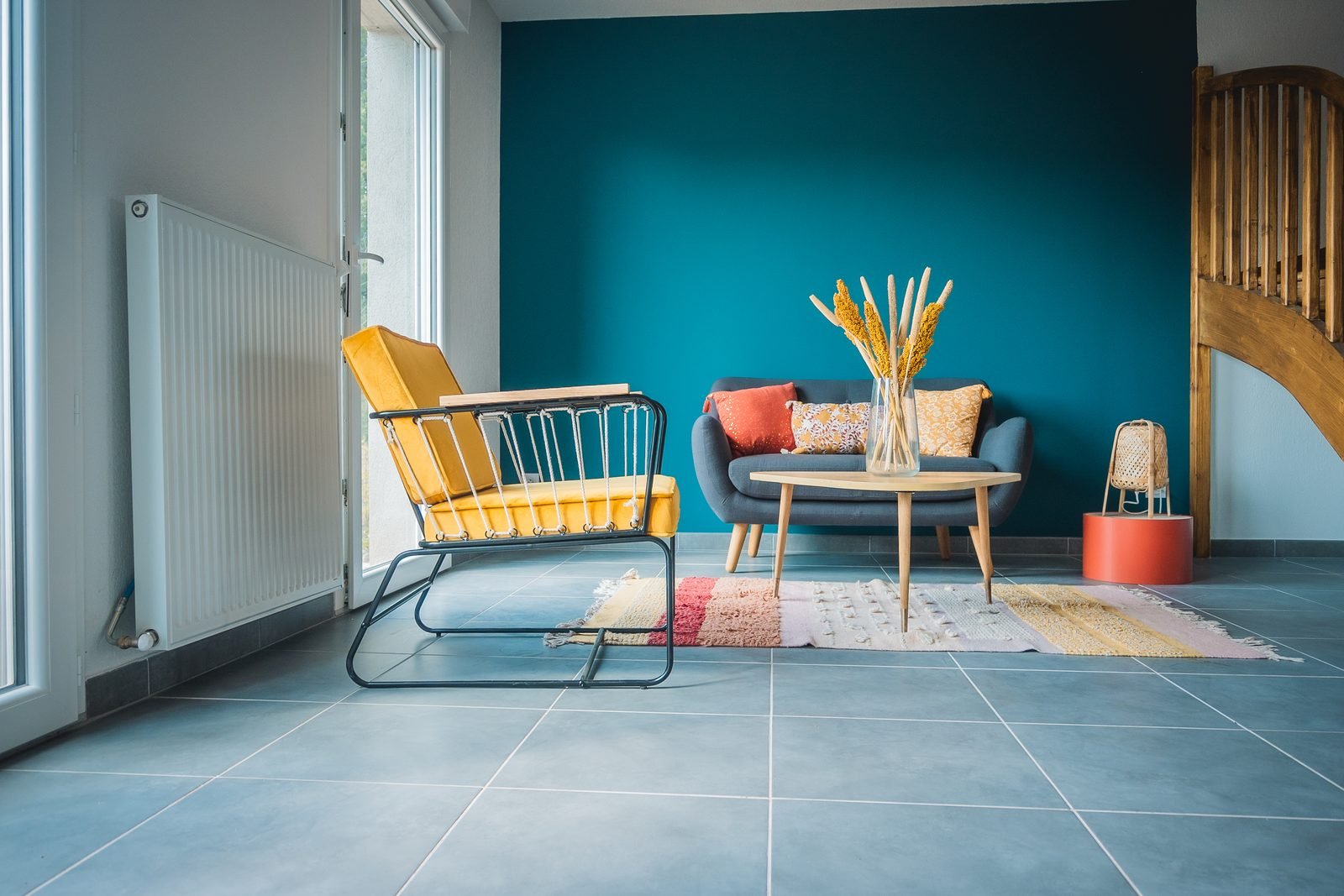
    Living room with a deep teal wall, blue sofa, mustard armchair and colorful rug
    Deep teal and mustard: a complementary pairing full of personality. Image: wirestock / Freepik

    If you’d rather create your own palette, the color wheel is your best friend. There are three main approaches.

    Analogous colors

    These sit next to each other on the wheel, such as green, blue-green and blue, or yellow, orange and terracotta. The result is harmonious and restful, ideal if you want color without harsh contrast.

    Complementary colors

    These are opposites: blue and orange, green and pink, purple and yellow. They create energy and contrast. The secret is balance: one color dominates and the other shows up in small touches. Muted versions, such as deep teal with mustard, are easier to live with than pure, saturated ones.

    Monochromatic palette

    This approach uses a single color in several intensities. It’s an elegant choice that works especially well with varied textures (linen, velvet, wood, natural fibers) so the room doesn’t feel monotonous. To see how each palette relates to your furniture’s style, see our guide to interior design styles.

    Colors for a small living room

    In compact spaces, color is a tool for making the room look bigger. A few strategies that work:

    • Choose light, slightly cool tones for the walls: icy white, pearl gray, soft aqua and grayish blue reflect more light.
    • Paint the walls and ceiling the same color (or the ceiling one shade lighter): this blurs the edges and makes the ceiling look higher.
    • Put the color in the furniture: a green or terracotta sofa adds personality without closing in the space.
    • Avoid too many strong contrasts: walls broken up by several colors fragment the room and make it look smaller.
    • Use a back wall: a mid-tone on the wall farthest from the entrance creates a sense of depth.

    Dark colors aren’t off-limits in small living rooms. With good lighting, moss green or navy blue on every wall can create an enveloping, almost cocooning effect. What doesn’t work is a dark color in a room with no natural light and little artificial lighting. For layout and furniture tips, see our article on small living room ideas.

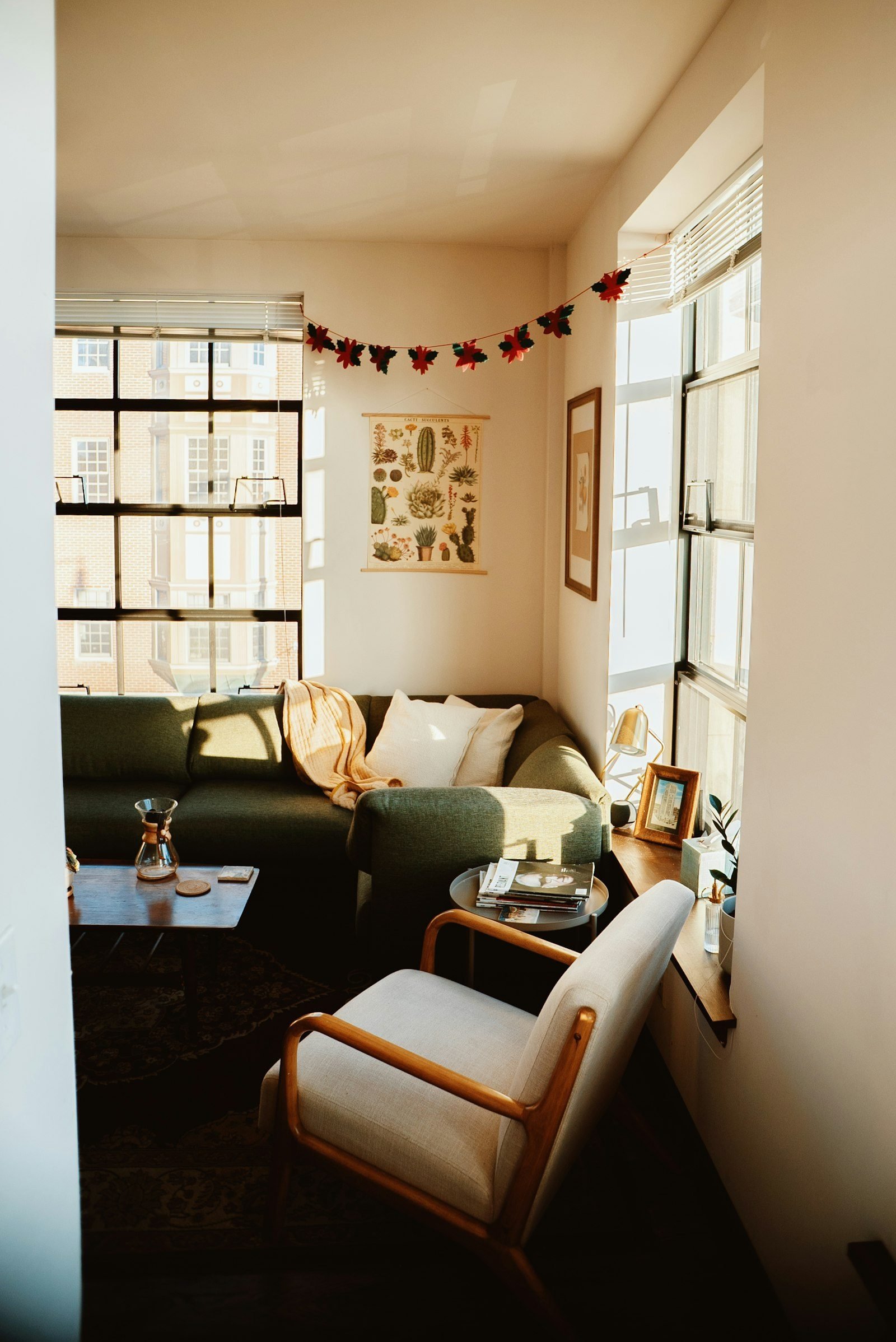
    Small living room with cream walls, a dark green sofa, a light wooden armchair and large windows
    Light walls with the color concentrated on the sofa: a smart strategy for compact living rooms. Photo: Evan Wise / Unsplash

    Colors for a TV room

    When the living room is mainly used for watching movies and shows, the focus shifts: the goal is visual comfort and fewer distractions.

    • A mid-tone or dark TV wall: charcoal, deep teal, moss green or brown help disguise the black screen when the TV is off and make the picture stand out.
    • A matte finish: satin or glossy paints reflect light from lamps and windows toward the screen.
    • Warm colors in the textiles: throws, pillows and rugs in caramel, burgundy or mustard balance cooler walls and make the room inviting.
    • Wood paneling as an alternative: a slatted or flat wood panel adds color and texture without requiring dark paint.

    Wall color works hand in hand with lighting. Indirect light behind or beside the TV and warm-toned bulbs make the room more comfortable at night. We cover this in detail in our guide to home lighting design.

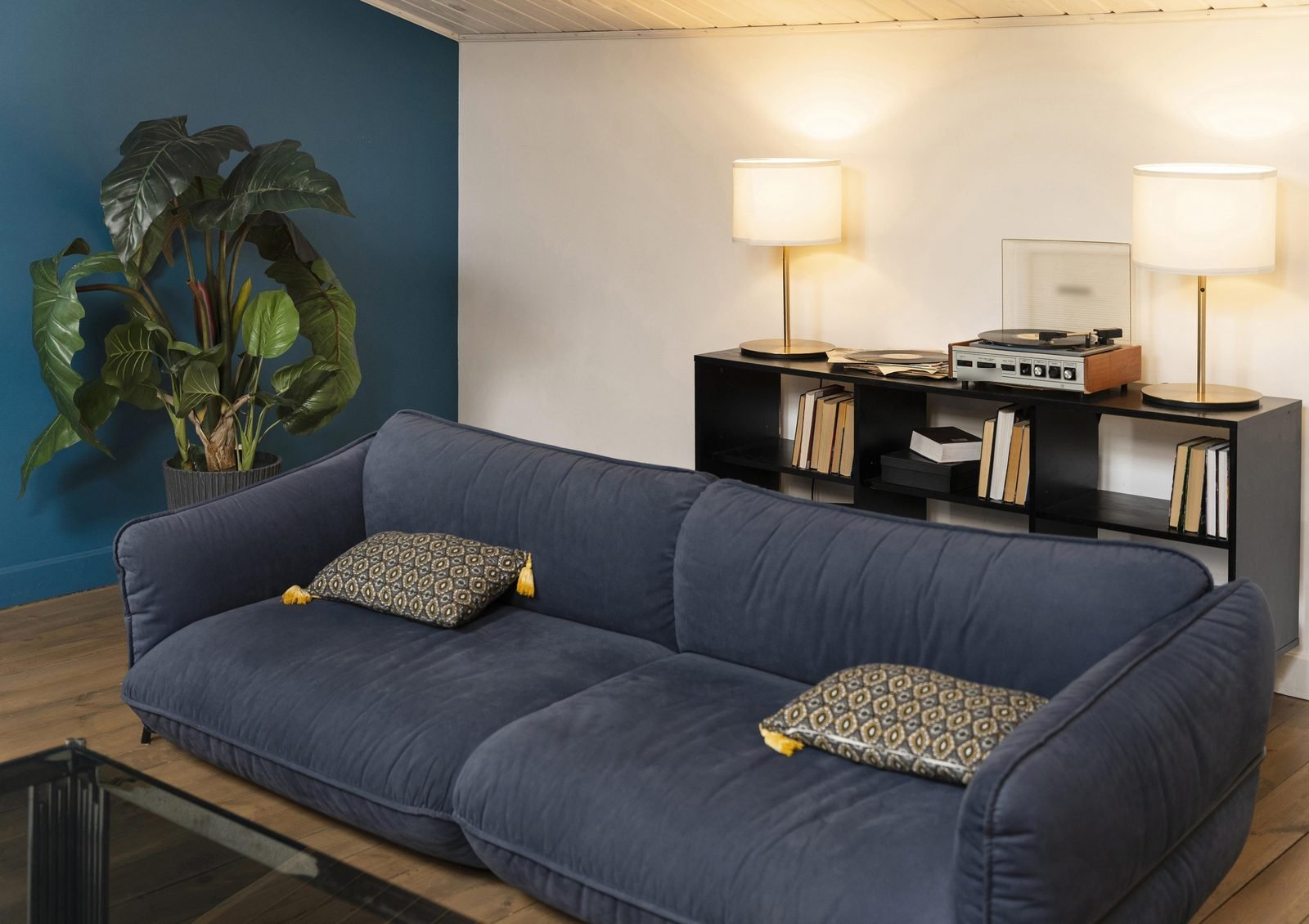
    Living room with a deep teal wall, navy sofa, black bookcase filled with books and lit table lamps
    Deep blues and warm light set the right mood for relaxing. Image: magnific / Freepik

    Checklist: how to test a color before you paint

    The same paint can look completely different in the brochure, at the store and on your wall. Before you buy gallons of it, run through this checklist:

    • Paint large swatches (at least 8.5 x 11 in / 21 x 30 cm) or use peel-and-stick samples.
    • Place the samples on different walls, including the one that gets the least light.
    • Check them in the morning, afternoon and evening, under the bulbs you actually use.
    • Compare the color with the floor, the sofa and your wood furniture, which won’t change.
    • Choose the finish: matte hides imperfections; satin is easier to clean.
    • Go for washable paint in homes with kids or pets.
    • Calculate the wall area and buy a little extra from the same batch for touch-ups.

    A note from someone who follows the real estate market: if you plan to sell or rent out your home in the next few years, a neutral base on the walls, with color in accessories and textiles, makes life easier. Visitors can picture their own furniture in the space, and repainting becomes optional rather than a must.

    Frequently asked questions

    What is the best color for a living room?

    There’s no single answer, but warm neutrals such as off-white, sand and greige are the most versatile, because they go with almost any furniture and let you change the accent colors over time.

    Can I use a dark color in a small living room?

    Yes, as long as the room is well lit, whether by natural or artificial light. A safer alternative is to use the dark shade on a single wall or on the cabinetry and keep the rest light.

    How many colors should I use in a living room?

    Three main colors are usually enough: a base, a supporting color and an accent, following the 60-30-10 proportion. Shades of the same color and natural wood don’t count as extra colors.

    What wall color goes with a gray sofa?

    A gray sofa is wonderfully easygoing. It looks great with white or sand walls for a light feel, with sage green or grayish blue for a serene mood, and with terracotta or mustard accents to warm things up.

    Conclusion

    Turning living room color ideas into a finished room is more about method than talent: understand the room’s light, set the proportion between base, supporting and accent colors, and test before you paint. Which palette suits your home best? Tell us in the comments, and don’t miss our guide on how to find your interior design style.

    Featured image: Photo: Kara Eads / Unsplash