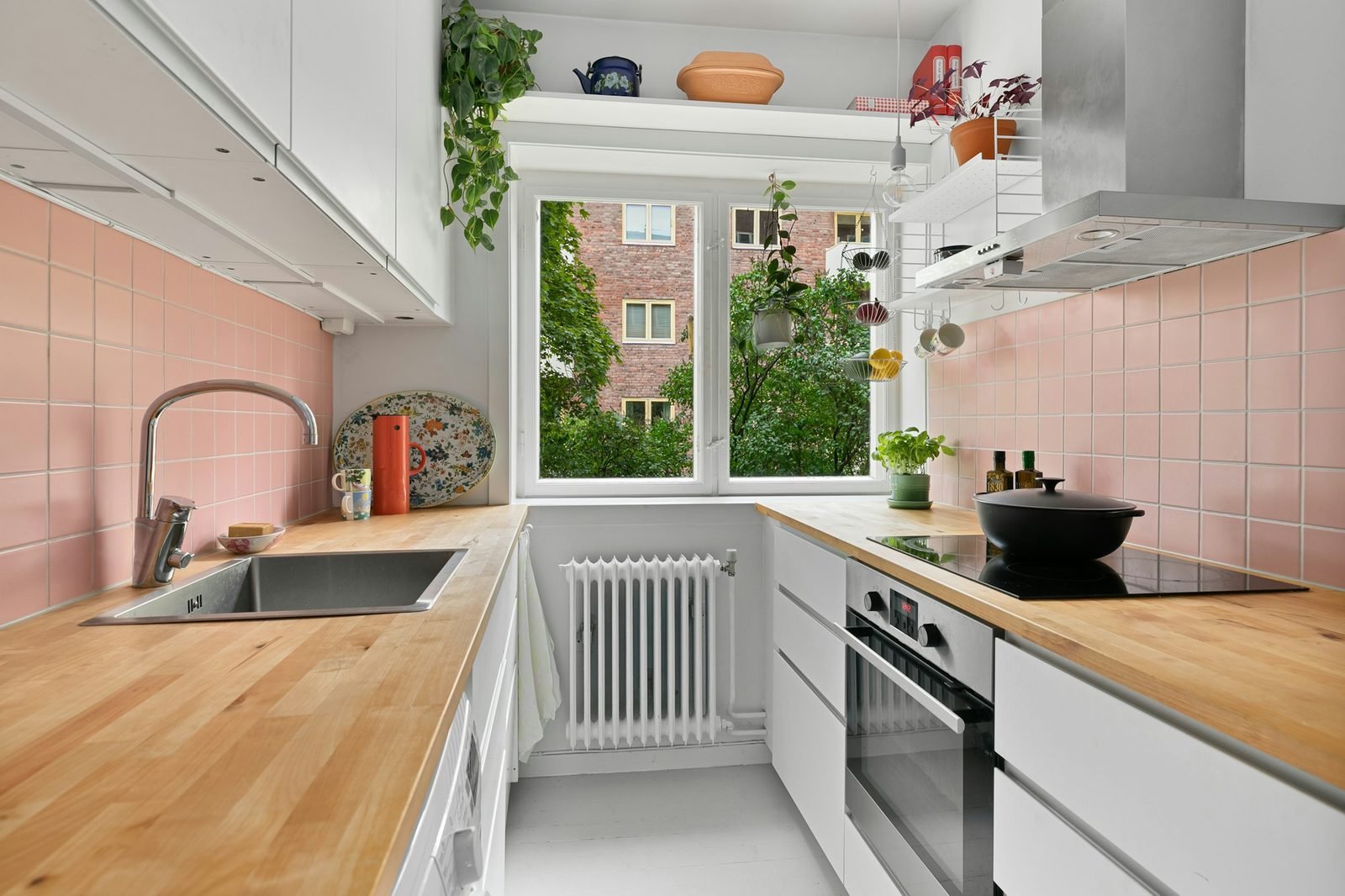
The best small kitchen ideas prove that a compact kitchen can be just as pleasant as a large one — and often more practical, because everything is within arm’s reach. The challenge is balancing three things that compete for the same space: work surface, storage and personality.
In this guide, you will see how to sort out your workflow before decorating, make the most of your walls, choose colors and lighting, and turn everyday objects into part of the decor. The ideas work for closed kitchens, galley kitchens and kitchens that open onto the living room.
Before you decorate, organize your workflow
Kitchen decor only works once the way you use the room is sorted out. Watch how you cook: where you set down the groceries, where you chop, where the pots and spices live. The classic arrangement connects the sink, stove and refrigerator along a short, unobstructed path, with clear counter space between them.
- Keep a stretch of counter empty next to the stove — that is where the food actually gets prepped.
- Store things near where you use them: pots close to the stove, glasses near the sink or fridge, spices within reach of whoever is cooking.
- Keep only your everyday items handy. Baking pans, party platters and rarely used appliances can go up high or to another room.
- Plan for trash: a bin under the sink, ideally with a separate compartment for recyclables, keeps bags off the floor and frees up room to move around.
This exercise usually frees up more space than any organizer could. And if you plan to touch gas, water or electrical lines, always hire licensed professionals.
Use your walls: vertical storage
When floor space is scarce, the answer lies in height. Well-used walls get things off the counter and make the whole kitchen feel lighter.
Cabinets up to the ceiling
Upper cabinets that run all the way to the ceiling eliminate that awkward gap that only collects dust, and they add extra room for items you use occasionally. In light colors, they practically blend into the wall and never feel heavy.
Open shelving
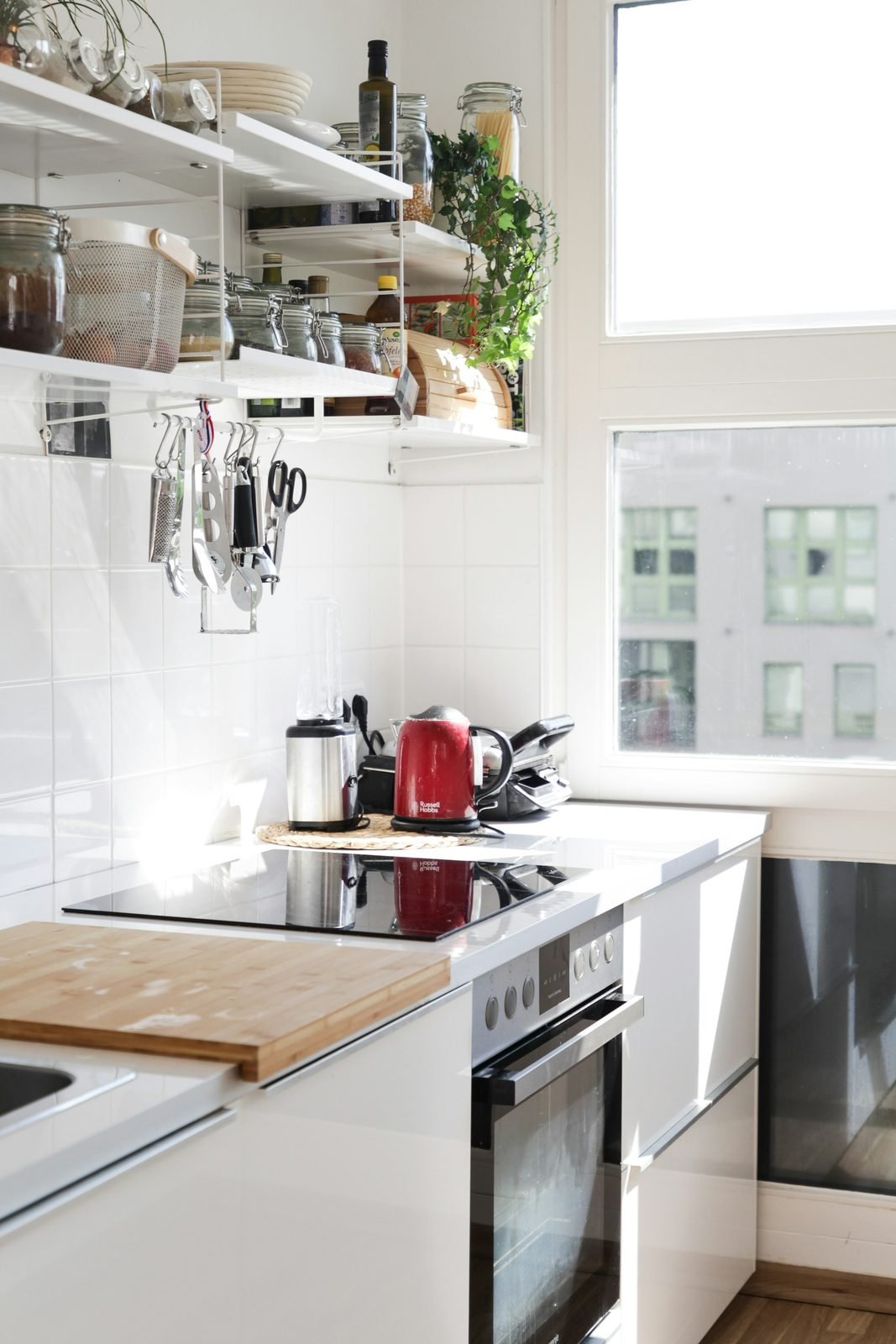
Replacing some of the upper cabinets with shelves makes the room feel airier and shows off pretty dishes and jars. The secret is to stay organized and display pieces you use often: that way they circulate, get washed regularly and don’t collect grease. Near the stove, stick with closed doors.
Rails, hooks and bars
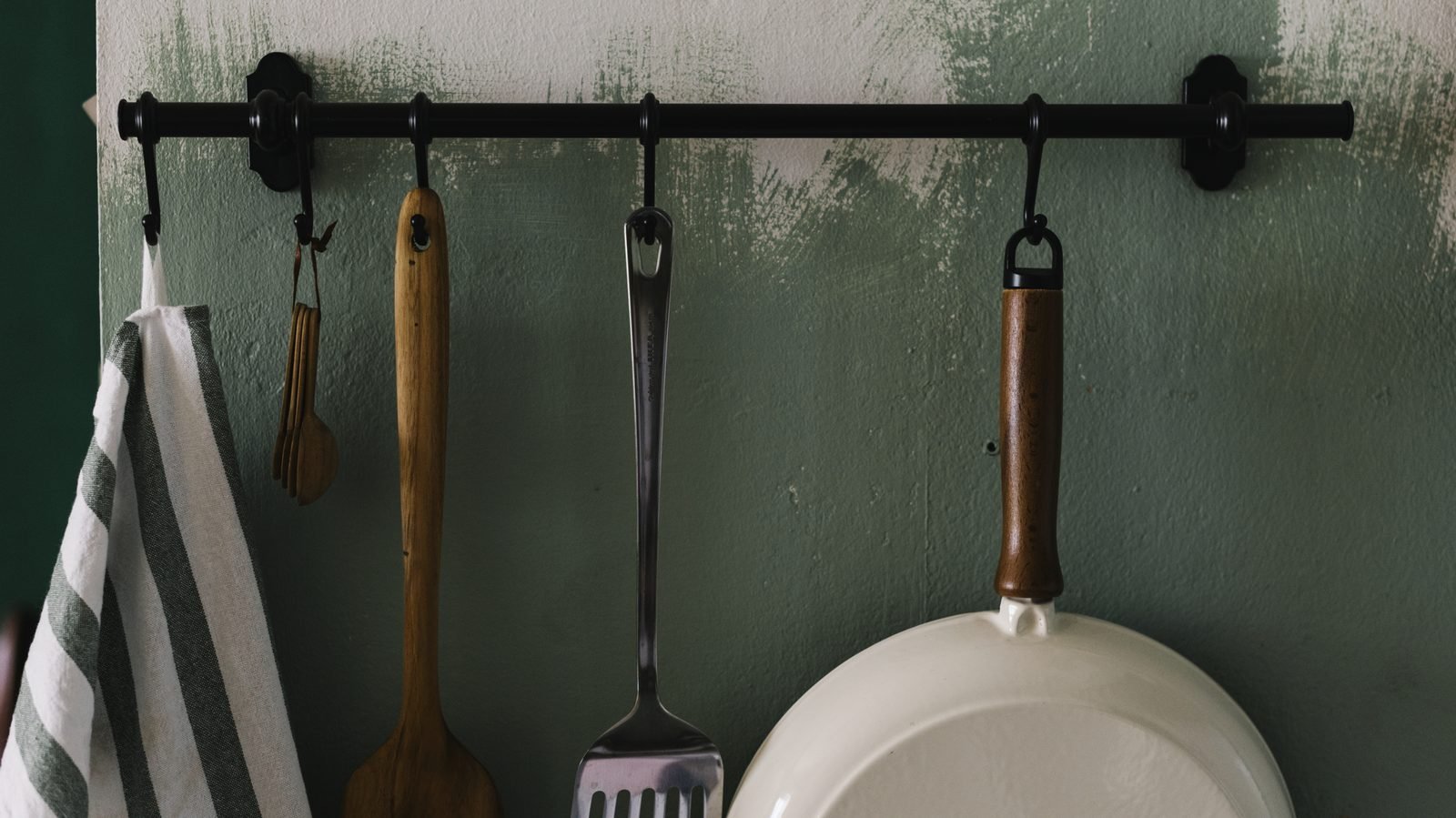
A metal rail on the backsplash wall holds ladles, spatulas, dish towels and even small pots of herbs. Magnetic knife strips free up drawer space, and hooks under the cabinets hold mugs. With just a few holes, your usable space multiplies.
Colors and finishes that open up the space
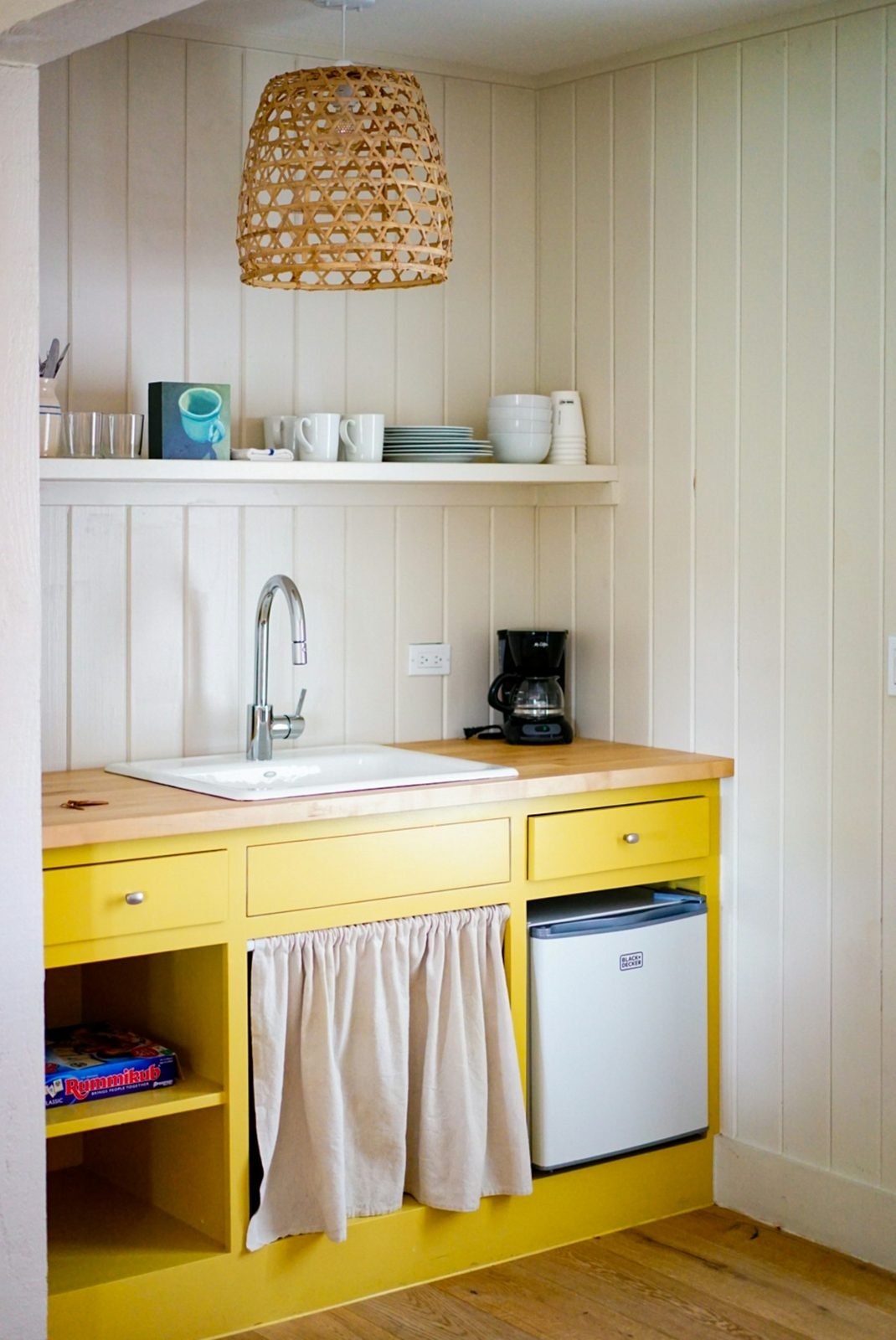
Light, smooth surfaces reflect light and make the kitchen brighter. White, off-white, pale gray and light wood are safe choices, but not the only ones. A great option for small spaces is to use color only on the lower cabinets — green, blue, yellow or terracotta — and keep the uppers light. The room gains personality without feeling heavy.
- Low-profile hardware, such as integrated finger pulls, edge pulls or push-to-open doors, gives the cabinetry a cleaner look.
- A countertop and backsplash in similar tones reduce the number of “lines” in the room.
- Easy-to-clean finishes, like washable paint and tile with minimal grout, are essential near the stove and sink.
- A fabric curtain instead of doors under the sink is a simple, charming solution for tight budgets — as long as the fabric is easy to wash.
If your kitchen is open to the living room, plan the palette together with the rest of your home. Our living room color ideas can help you create that continuity.
Lighting: the detail that changes your routine
With a single bulb in the center of the ceiling, your own body casts a shadow on the counter while you chop. That’s why a small kitchen benefits from two layers of light:
- General lighting that is even and neutral in tone, so you can see the true colors of food and clean with ease;
- Task lighting under the upper cabinets, with LED channels or strips, shining directly on the prep area.
If your kitchen gets natural light, make the most of it: keep the windowsill clear of clutter and choose light curtains or pale blinds that filter the sun without darkening the room.
Over peninsulas and in open-plan kitchens, a pendant above the counter creates a focal point and helps visually separate the spaces. Any new installation should be done by a licensed electrician. To learn how to combine different types of light throughout your home, see our guide to home lighting design.
Solutions by effort and impact
Not every improvement requires a remodel. The table below helps you decide where to start. Costs are only relative and vary widely depending on where you live, the size of the kitchen and the finishes you choose.
| Solution | Construction needed? | Relative cost | Best for |
|---|---|---|---|
| Wall rails and hooks | No, just a few holes | Low | Freeing up the counter |
| Cabinet organizers and matching containers | No | Low | Making the most of existing cabinets |
| Peel-and-stick decals over tile | No | Low | Testing a style or decorating a rental |
| Open shelves | Minor installation | Low to medium | Lightening the upper wall |
| Painting the cabinets | No, but requires prep | Low to medium | Refreshing without replacing anything |
| Under-cabinet LEDs | Electrical work | Medium | Improving the prep area |
| Custom cabinets up to the ceiling | Carpentry | High | Gaining storage |
| Replacing the tile | Yes | High | A complete change of style |
Open-plan kitchens: connecting with the living room
In compact apartments, the kitchen often opens onto the living room. In that case, it becomes part of the social space’s decor and deserves the same attention.
- Repeat a color, wood or metal from the living room in the kitchen.
- Use a counter with stools as a transition: it works for quick meals and can replace a dining table in very small spaces.
- Choose visible appliances and utensils in colors that suit your palette.
- Keep the countertop as clear as possible, since it can be seen from anywhere in the living room.
Decor that works: useful objects on display
In a small kitchen, every object on display should either serve a purpose or tell a story. Wooden cutting boards leaning against the wall, glass jars of grains, a beautiful fruit bowl and a set of mugs create a living decor that changes as you use it.
Fresh herbs in pots near the window add fragrance and charm. Basil (Ocimum basilicum), for example, is listed as non-toxic to dogs and cats by the ASPCA (American Society for the Prevention of Cruelty to Animals). Before bringing other species into a home with pets, it’s worth checking their toxicity first.
Textiles count too. A washable, non-slip rug in front of the sink, dish towels in the same palette and a pretty tablecloth soften a room full of hard surfaces, and they can be changed with the seasons.
Finally, remember that less is more: choose one or two focal points — a shelf, the window or the counter — and let the rest breathe.
Frequently asked questions
What is the best color for a small kitchen?
Light shades on the largest surfaces, like the walls and upper cabinets, increase the sense of space. For personality, add color to the lower cabinets, a band of tile or your accessories.
Does open shelving get dirty quickly?
It collects more dust and grease than a closed cabinet, especially near the stove. Use it for everyday items, install it away from the cooking zone and keep your range hood well maintained.
Can you fit a table in a small kitchen?
Yes. Compact round tables, wall-mounted drop-leaf tables and counters with stools that tuck underneath take up little space and handle quick everyday meals.
How do you decorate a small kitchen in a rental?
Stick to removable solutions: organizers, peel-and-stick decals (tested first), rails that need only a few holes and new cabinet hardware, keeping the originals. Check your lease, get written permission from your landlord, and find more ideas in our guide to renter-friendly decorating.
Conclusion
A well-decorated small kitchen comes from a balance of organization and warmth: a smooth workflow, well-used walls, well-placed lighting and a few objects chosen with care. Start with the simple changes and build from there as you feel the difference in your routine.
What is the biggest challenge in your kitchen right now? Tell us in the comments and share the solutions that have worked for you.
Featured image: Photo: Alex Tyson / Unsplash