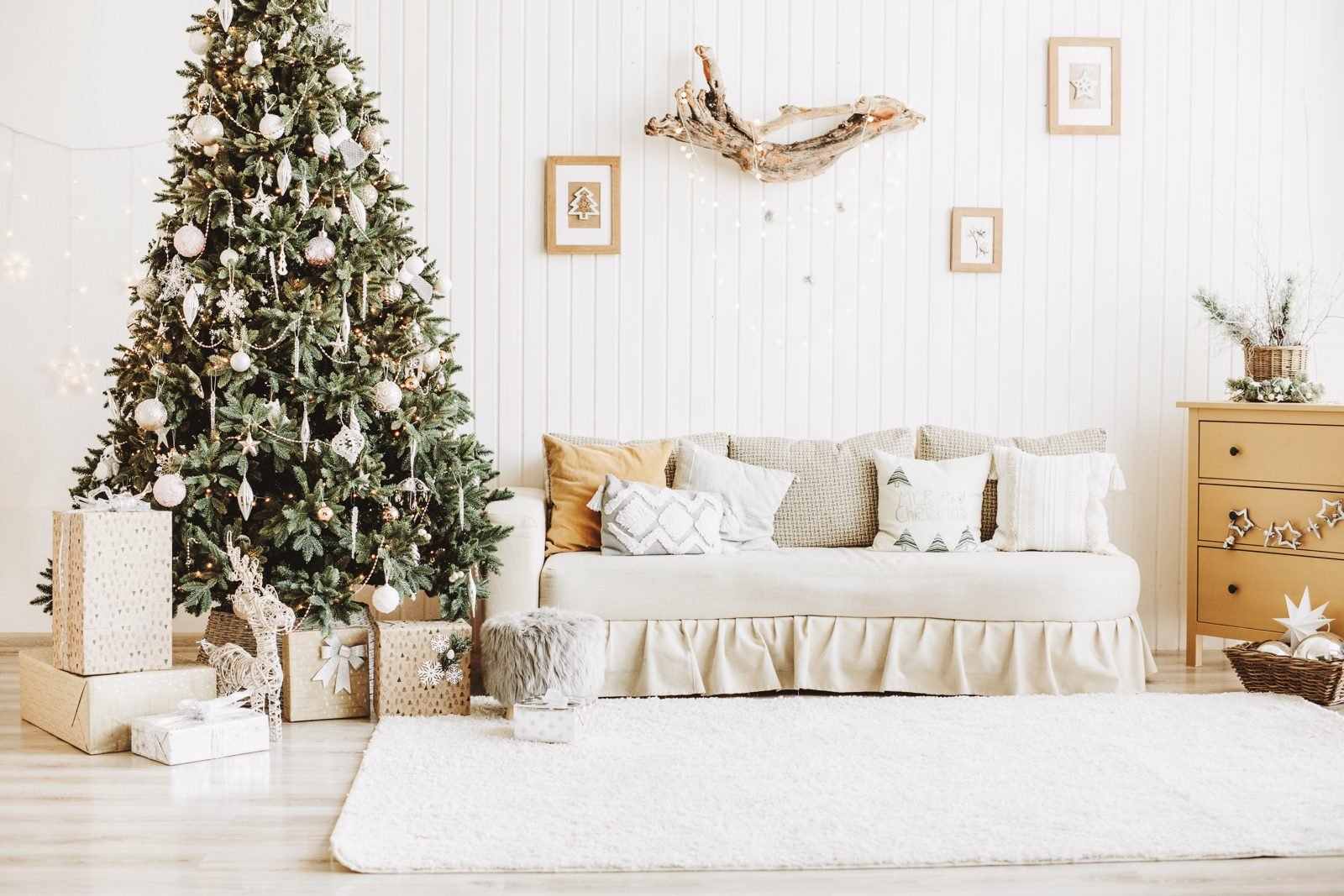
Good simple Christmas decorating ideas are not about doing less for the sake of it. They are about making clear choices. Instead of scattering ornaments in every corner, you pick a few focal points, a short color palette and materials that work with the home you already have. The result tends to look more polished, goes up faster and is far easier to pack away in January.
In this guide, you will learn how to plan your decor step by step, choose the right tree for your space, make arrangements with branches and other natural elements, set a festive table without overspending and use lights safely. It works for a large house, a compact apartment or a rental, and for every kind of household — from a couple spending the holidays together to a home full of family and friends.
Start with a plan: fewer spots, more impact
Before buying a single ornament, walk through your home and choose no more than three or four spots to decorate. These usually work well:
- One main feature: the tree or a large arrangement, in the room where everyone spends the most time.
- The entry: a wreath on the door or a small arrangement on a console table to welcome guests.
- The table: a low centerpiece that can stay in place all month.
- A touch of light: a string of lights on a bookshelf, window or balcony.
Concentrating the decor keeps things from feeling cluttered, especially in small rooms. If your living room is compact, the circulation and proportion tips in our guide to small living room ideas also help you place a tree without blocking the way.
Pick a short palette (and stick to it)
A palette is what turns a pile of ornaments into a cohesive look. The rule of thumb: choose one base color, one supporting color and one metal. That makes it easier to reuse what you already own and buy only what is missing.
| Style | Base | Support | Metal and textures |
|---|---|---|---|
| Classic | Green | Red | Gold, velvet, plaid |
| Scandinavian | White | Green and light wood | Silver, linen, wool |
| Natural | Green | Beige and terracotta | Copper, jute, dried branches |
| Modern | White or charcoal | One accent (blue, pink or burgundy) | Gold or matte black |
If your living room already has a strong color on the sofa or a wall, let it into the palette. Holiday decor that works with the room looks intentional; decor that fights it looks improvised.
The Christmas tree: size, placement and ornaments
The tree is usually the most visible element, so it pays to get three things right: size, placement and how many ornaments you use.
Size and placement
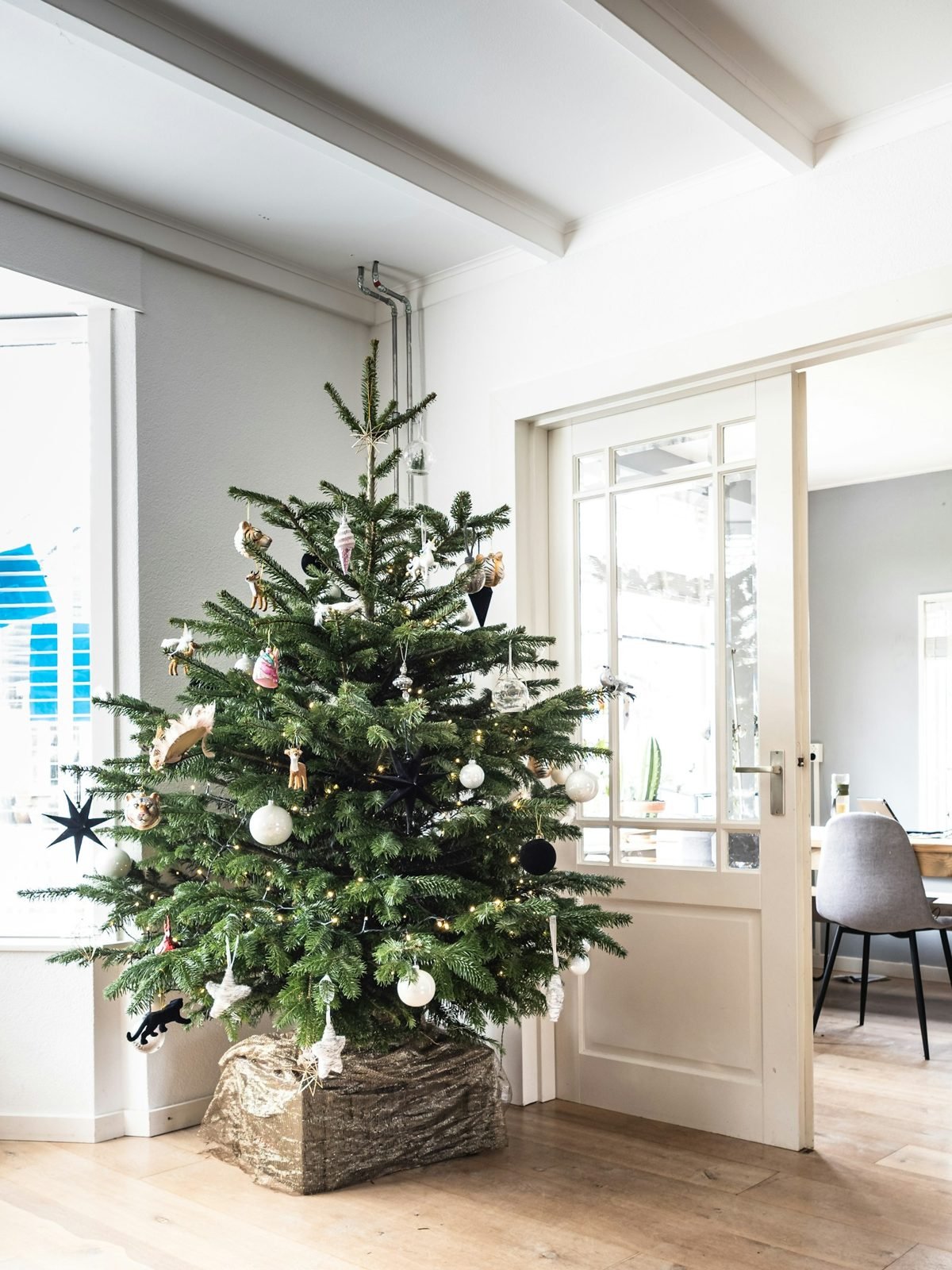
Measure the space before you buy. Leave a comfortable walkway around the tree, and keep it away from curtains, lamps and heaters. A corner near a window works well because the lights show from outside and the tree stays out of the main traffic path. In very small spaces, consider a tabletop tree, a wall tree made from branches and ribbon, or a small potted pine on a console.
Decorate with a method
For a simple, beautiful tree, work in layers: lights first, from the trunk out to the tips; then the larger ornaments, spread in a zigzag; and finally the small details. Limit yourself to two or three ornament types and repeat them. Repetition creates unity — it is what makes a tree look planned.
In the Christian tradition, many families put up the tree on the first Sunday of Advent (November 29 in 2026) and take it down on Epiphany, January 6. It is not a rule: the best time is whatever suits your routine.
Natural touches: branches, pine cones and dried fruit
Natural materials are the most efficient shortcut to a simple, cozy Christmas look. They bring texture, scent and color without requiring many pieces.
- Branches in a vase: a jar or bottle filled with green branches (real or faux) is an instant arrangement. Tie on some twine and a dried orange slice to finish it.
- Pine cones: loose on a tray, in a basket or wired onto a wreath.
- Dried oranges: thin slices baked in a low oven until dry make ornaments for the tree, gifts and the table.
- Your own houseplants: plants you already have can join the decor with a ribbon or a jute cover pot.

A note for pet owners and parents: according to the ASPCA, poinsettia (Euphorbia pulcherrima) is only mildly toxic to cats and dogs, but it can cause irritation if chewed; holly and mistletoe can also cause vomiting and diarrhea. Keep these plants out of reach and use shatterproof ornaments on the lower branches. For safer everyday choices, see our guide to the best plants for apartments.
Wreath and entry: the first impression
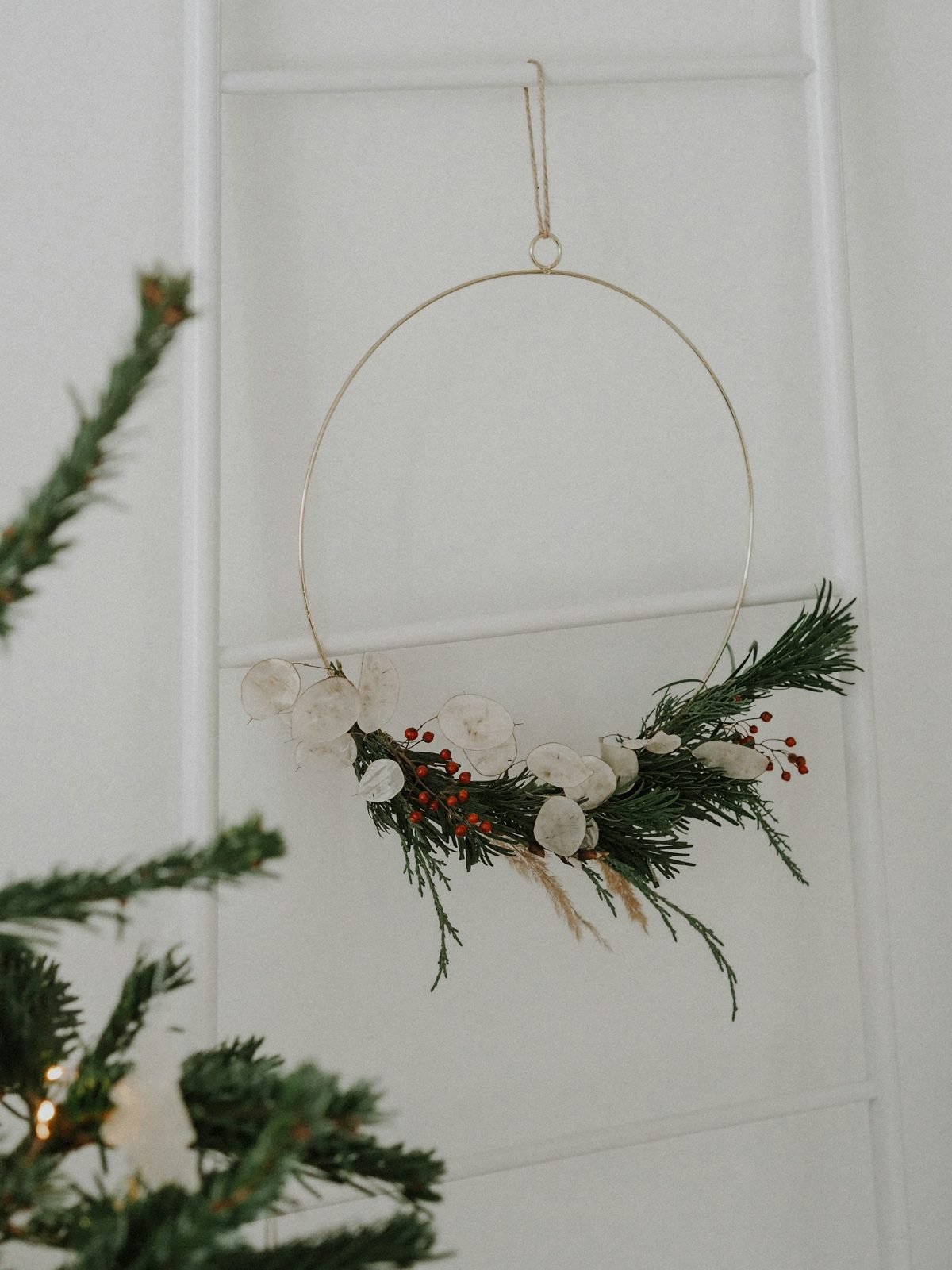
The entry is where your holiday decor begins, and a well-made wreath handles it on its own. To avoid the obvious, try a metal or wooden hoop only partly covered with greenery, plus a few dried flowers or red berries. The open space in the hoop keeps the piece light and modern.
If you live in an apartment building, check the building rules before hanging anything on a door that faces a shared hallway. In a rental, use removable adhesive hooks instead of nails; our article on renter-friendly decorating has more damage-free solutions that also work for the holidays.
A relaxed table setting
A low centerpiece lets people see each other and talk. A tray with candles of different heights, some green sprigs and a few pine cones is enough to set a festive mood. Add cloth napkins in your supporting color, each tied with a small sprig.
If you use real candles, keep them away from dry greenery, paper and fabric, and never leave them burning unattended. LED candles are a safe alternative in homes with children and pets.
Christmas lights, safely
Lights create much of the festive effect, but they call for care. Common advice from electric utilities and consumer safety agencies includes:
- Choose products that carry a recognized safety certification where you live and come from a clear, traceable brand; be wary of prices far below the market.
- Inspect wires and bulbs before installing, and throw away any string with damaged insulation.
- Do not overload outlets by chaining adapters and extension cords.
- Outdoors, use products rated for outdoor use; battery-powered strings run on low voltage.
- Switch the lights off when you go to bed or leave home.
For larger setups, such as a facade or a balcony that needs new electrical points, hire a licensed electrician. Warm-white lights usually make a room feel cozier, and in small spaces a few well-placed light sources do more than many strings scattered around.
Simple Christmas decor checklist
- I chose no more than four spots to decorate.
- I set a palette with a base color, a supporting color and one metal.
- I measured the tree spot and kept a clear walkway.
- I sorted what I already own before buying anything new.
- Toxic plants and fragile ornaments are out of reach of pets and children.
- Lights are checked, with no overloaded outlets.
- I set aside a labeled box to store everything in January.
Frequently asked questions
How do I make simple Christmas decor look beautiful?
Choose a few focal points, a two-color palette plus one metal, and repeat the same ornament types. Natural elements such as branches and pine cones make the look cozy with very few pieces.
Can I decorate for Christmas without a tree?
Yes. A vase of branches, a wreath at the entry and a candle centerpiece on the table create a holiday feel while taking up very little space.
When should I put up Christmas decorations?
In the Christian tradition, on the first Sunday of Advent — November 29 in 2026 — and take them down on Epiphany, January 6. Many families choose other dates, and that is perfectly fine.
How can I save money on Christmas decor?
Reuse older ornaments within a new palette, use branches, pine cones and dried oranges, and buy only what you need to complete the spots you chose. Prices vary by region and material.
Conclusion
Simple Christmas decor comes from a few good decisions: where to decorate, which colors to use and which materials to highlight. Once those are settled, your home feels festive, safe and easy to tidy up after the holidays. Tell us in the comments which idea you will try this year.
Featured image: Image: valeria_aksakova / Freepik